2027 Porsche 911 GT3 RS Spied Testing with Turbocharged Engine and New Aerodynamics
The legendary naturally aspirated screamer trades its 9,000-rpm redline for forced induction to battle American rivals and meet emissions standards
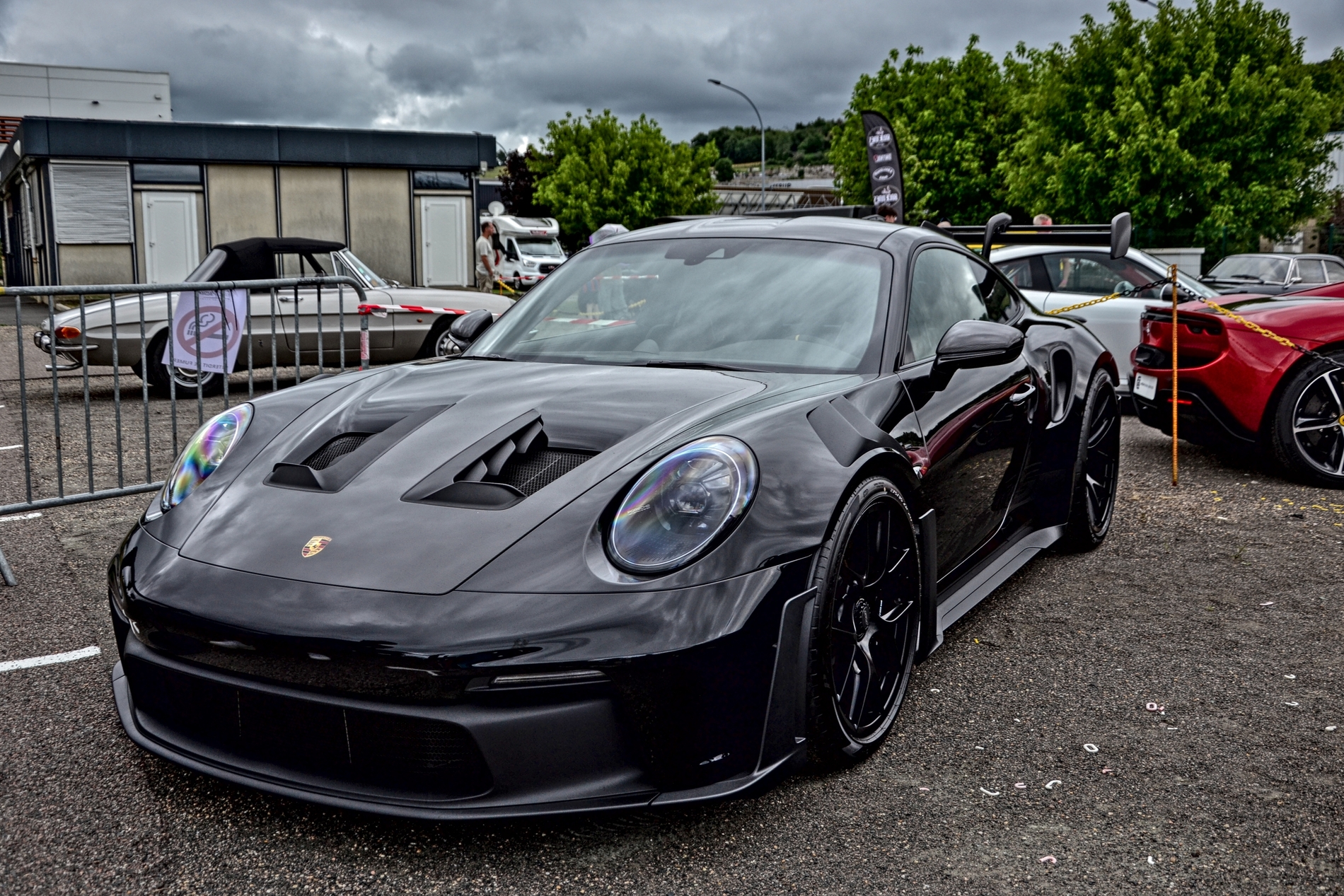
Get ready for some big news, Porsche fans. The naturally aspirated engine that’s made the 911 GT3 RS so special is about to disappear. Fresh spy photos from cold-weather testing in Scandinavia show that the 2027 Porsche 911 GT3 RS is going turbocharged. Yes, you read that right. For the first time ever, the GT3 RS will have forced induction.
Why the change? Well, Porsche is facing pressure from two sides. The upcoming Euro 7 emissions regulations are making it really tough to keep the current naturally aspirated setup legal. But there’s another reason that might sting even more. The GT3 RS has been getting beaten by American rivals like the Ford Mustang GTD and Chevrolet Corvette ZR1X. When your car costs around $400,000 and a $200,000 Corvette is leaving you in the dust, something has to change.
The spy shots reveal some pretty dramatic updates. The rear wing is completely new and now has three horizontal elements instead of two. We’re expecting it to still use Porsche’s DRS system for active aerodynamics, but nobody knows yet which of the three elements will move. This bigger wing tells us Porsche is going all-in on downforce and track performance.
Heat management looks like a major priority with this redesign. There’s a large new air outlet sitting right above the rear license plate. This vent helps push hot air out of the engine bay faster. Makes sense when you think about it. Turbocharged engines run much hotter than naturally aspirated ones, so you need better cooling.
The exhaust system got a serious makeover too. The tailpipes are thicker now and sit above a redesigned diffuser. Here’s where it gets interesting. There are two additional exhaust outlets on the outer edges that point down at the ground. These might work as wastegate dump valves to handle turbocharger backpressure. Or they could help energize the rear diffuser using hot exhaust gases. Either way, they’re there for a good reason.
The front bumper has been completely reworked with a more aggressive look and bigger air intakes. The side inlets near the rear wheels are larger than what you see on the current model. Again, all signs point to managing that extra turbo heat.
Want proof this thing is turbocharged? Check out the video footage from the Nurburgring. Someone posted an Instagram clip showing a prototype lapping the Green Hell, and you can clearly hear it. That unmistakable turbo whoosh gives the whole game away.
View this post on Instagram
Power figures are still anyone’s guess, but most people are expecting around 600 horsepower. Will Porsche keep the 4.0-liter displacement or drop down to a 3.6-liter turbocharged hybrid setup like the 992.2 GTS and Turbo models? Nobody knows for sure yet.
Here’s the tough part for purists. That glorious 9,000-rpm redline we all love is probably going away. Honestly, it is a bit sad to think about. But the upside is better performance and a car that actually meets modern emissions standards. You win some, you lose some.
Porsche should reveal the official car sometime around August 2026. After that, expect to see production models showing up at racetracks before the year ends. The GT3 RS is evolving whether we like it or not.