What It Feels Like to Own a 1994 Mazda MX-5 Miata NA Today
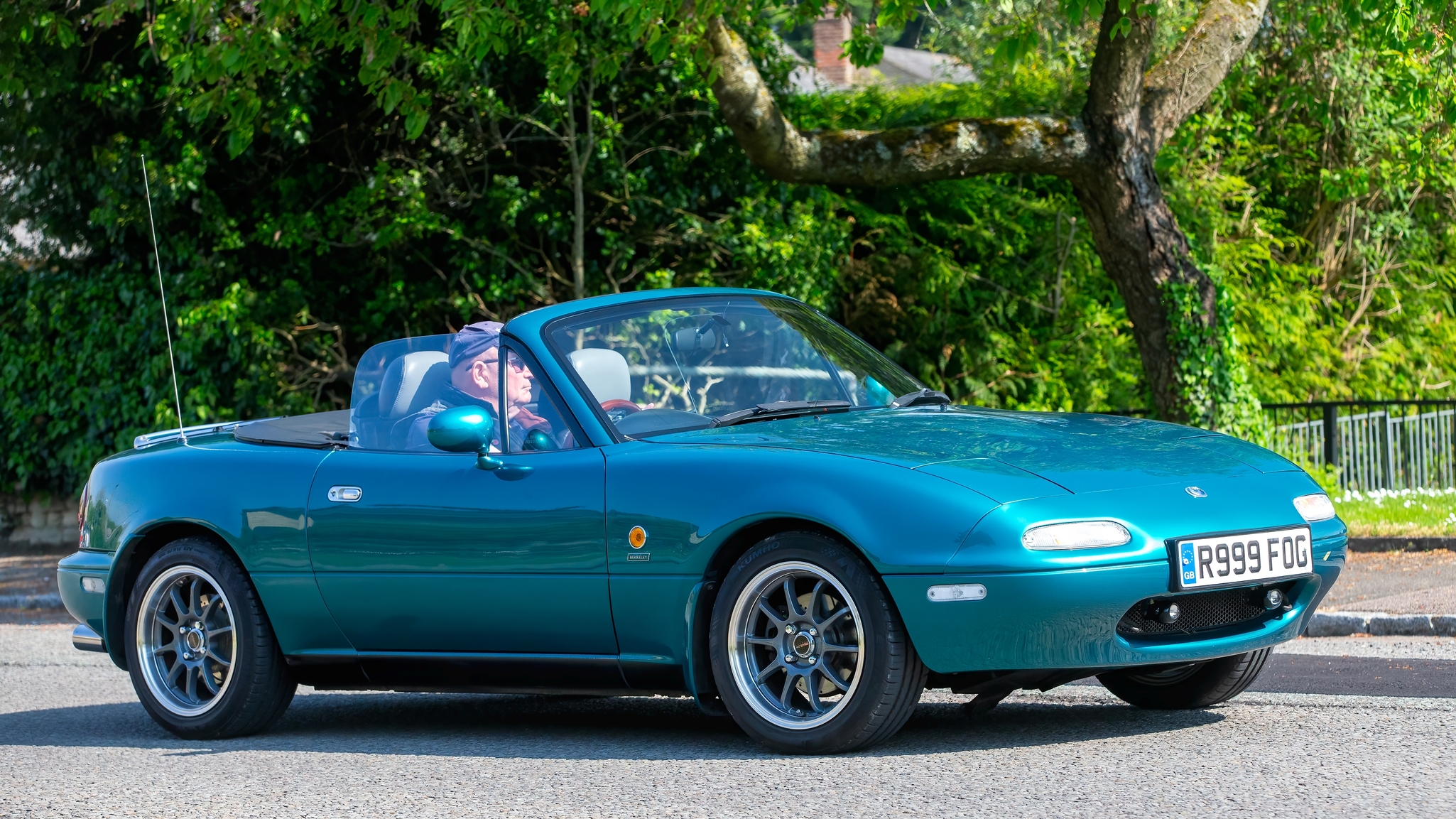
Few cars from the 1990s still feel rewarding to drive, and the Mazda MX-5 Miata NA is one of them.
The 1994 Mazda Miata always reminds me that a pleasurable driving experience doesn’t need a big engine and modern tech. This lightweight roadster brings back pure nostalgia for me on a weekend ride. The first-generation MX-5 Miata is special. Its pop-up headlights, rounded body, compact proportions, and simple convertible design give it a personality that many modern cars have lost. The 1994 model is particularly interesting because it received a powerful 1.8-liter engine upgrade, up from a 1.6-liter.
The Pop-Up Headlights Still Make It Special
The first thing I love about the 1994 Mazda MX-5 Miata is its design. It is small, simple, and recognizable without needing aggressive bodywork or oversized wheels. The long hood, shorter trunk, and low seating position give it the proportions of a traditional roadster.
Then there are the pop-up headlights. They give the car an identity that is difficult to reproduce with modern designs. Raising them changes the entire look of the front, and it is one of those details that makes the MX-5 Miata NA feel connected to another era of automotive design.
The soft top adds more to the character. It is manually operated, relatively simple, and lets me enjoy the breeze while driving. On a pleasant afternoon, lowering the roof is my go-to.
I would not call the Mazda MX-5 Miata NA luxurious, but I do think its design is old even today.
The 1.8-Liter Engine Gives It Enough Power
The 1994 model marked an important change for the U.S. Mazda MX-5 Miata. Mazda replaced the earlier 1.6-liter engine with a naturally aspirated 1.8-liter four-cylinder.
It produces 128 horsepower and 110 lb-ft of torque. Those numbers are retiring by modern standards, but the Miata weighs only 2,300 pounds. That low weight makes a significant difference to how the car drives.
The engine is not built to deliver dramatic acceleration. It speeds up progressively, and I enjoy stick shifting to feel the power rather than relying on a large torque reserve. The gear shifter is one of the best parts of the experience. Its short movements make changing gears quick.
The rear-wheel-drive setup adds another layer of enjoyment. The car feels balanced and stable, particularly on winding roads. Its steering communicates where the front tires are going, and the lightweight body makes maneuvering easy.
That is why I would rather take the Mazda MX-5 Miata NA on a scenic road than judge it by a drag race. It goes from 0 to 60 mph in 8.8 seconds, which makes it relatively slow compared with modern performance cars. But acceleration has never been this car’s USP.
A Simple Cabin That Keeps Me Connected
The interior follows the same philosophy as the exterior. It is compact, simple, and driver-focused.
The dashboard has analog gauges, manual controls, and an easy-to-understand layout. There is no large infotainment screen to explore menus. The driving experience is the main attraction.
I particularly like the seating position. Sitting low and close to the center of the car makes the Mazda MX-5 Miata NA feel more laid to the road. The steering wheel, pedals, and gear lever are all within reach, creating a cockpit that feels purpose-built.
However, the cabin is not very practical. There are only two seats, limited storage compartments, and a small trunk with about 3.6 cubic feet of capacity. It is enough for a small overnight bag, but I would not plan a long trip that requires much luggage.
Comfort also depends on expectations. The seats and cabin feel like they’re from another era, and road and wind noise are noticeable. The car can be used regularly, but I would much rather enjoy it on weekends and quieter roads than spend hours covering interstate miles.
Why Weekend Cruising Suits the Miata
This is where I think the Mazda MX-5 Miata NA makes the most sense.
With the roof down, the engine revving to max, and the steering responding to small inputs, even a small drive feels entertaining. I do not need to drive aggressively to enjoy it. This car makes curvy roads and corners interesting.
Other owner feedback also supports my view. Handling, steering response, the manual gearbox, and overall driving enjoyment come up repeatedly in reviews. People also praise the car’s mechanical simplicity and the strong enthusiast community surrounding it.
Common complaints include limited storage, highway noise, and less comfort than a modern car. For me, those compromises are easier to accept when I think of the Miata as a weekend roadster rather than an all-purpose vehicle.
What Ownership Looks Like After 30 Years
There is an important difference between buying a 1994 Mazda MX-5 Miata and buying a newer used car. At this age, the condition of the individual vehicle matters more than its reputation.
The 1.8-liter engine has a strong durability record when maintained properly. The mechanical layout is relatively simple, and replacement parts remain available. However, a car that has survived for three decades may still have worn suspension components, aging rubber hoses, oil leaks, or neglected maintenance.
Rust deserves particular attention. I would carefully inspect:
- Rocker panels and rear wheel arches: These are important areas where corrosion can develop.
- Floor and frame sections: Check underneath the car for structural rust or previous repairs.
- Convertible top: Look for tears, damaged seals, cloudy or cracked rear-window material, and signs of water leaks.
- Suspension and brakes: Check for worn bushings, leaking dampers, uneven tire wear, and aging brake components.
- Maintenance history: Confirm when the timing belt and water pump were last serviced, and look for evidence of regular fluid changes.
I would also be careful with heavily modified cars. Many Miatas have been used for autocross, track events, or engine upgrades. Some modifications are well executed, but a clean, properly maintained car is better than one with questionable upgrades.
One useful detail for buyers: The well-known short-nose crankshaft problem only appeared in 1990 and early 1991 1.6-liter Mazda MX-5 Miatas. It is not a concern with the 1994 1.8-liter model.
Would I Keep One in My Garage?
Absolutely, provided I had another vehicle for everyday errands.
The 1994 Mazda MX-5 Miata NA is not the fastest sports car, not the most comfortable convertible, or not the most practical vehicle I could own. But it is still enjoyable to drive.
I like its pop-up headlights, simple interior, five-speed manual gearbox, and lightweight rear-wheel-drive character. More importantly, I like the idea of taking it out on a clear weekend without needing a particular destination.
Clean, original NA Miatas have also gained recognition among collectors and enthusiasts. I wouldn’t sell mine because I expect its value to rise.