Nothing Can Beat the 2026 Wrangler 4-Door Rubicon In Off-Roading
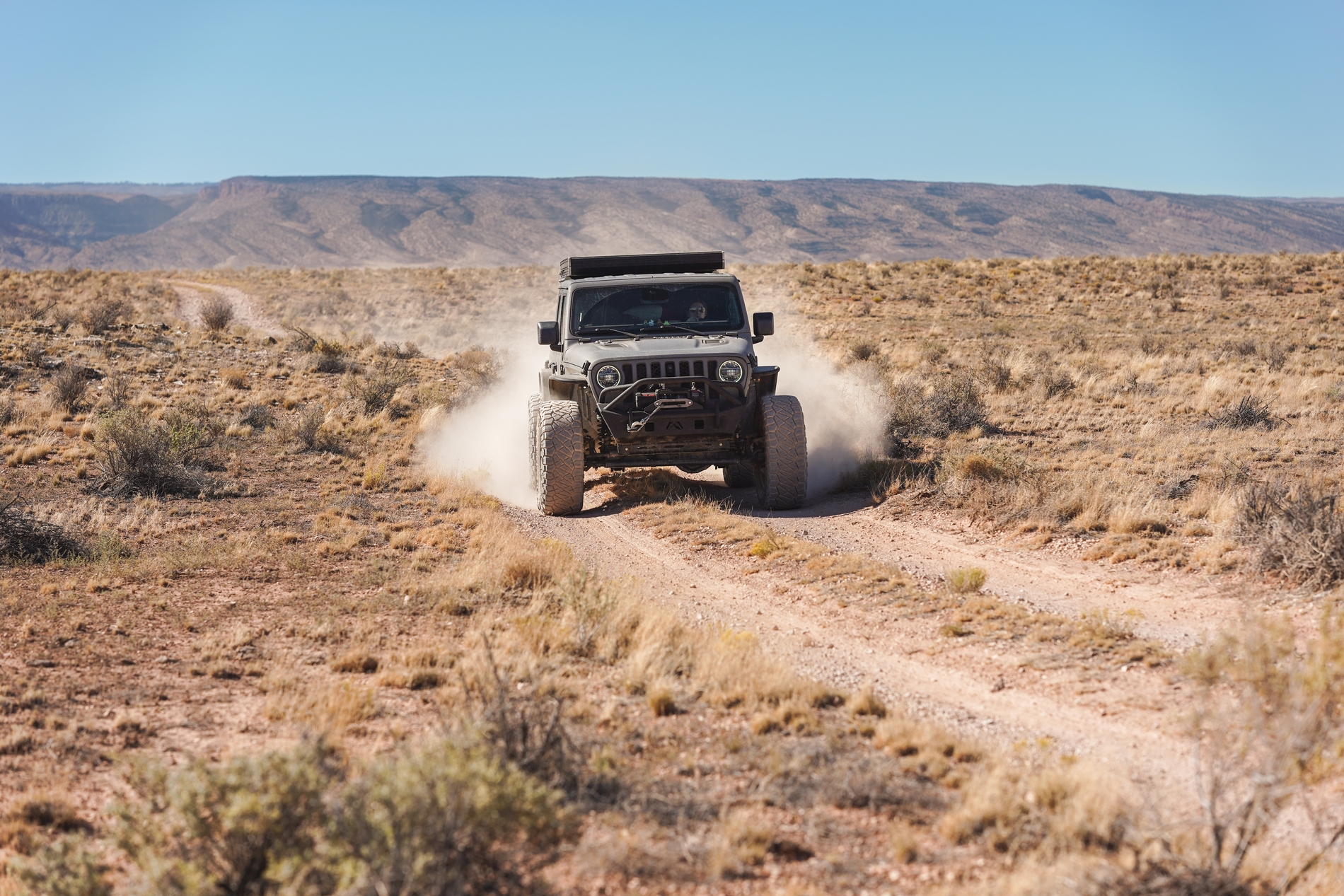
The 2026 Wrangler 4-Door Rubicon is still the off-road SUV I would pick first.
I have driven plenty of SUVs that are perfectly capable once the pavement ends, but the Wrangler Rubicon feels different. It does not simply offer an off-road mode and a few extra settings. It is designed to handle tough trails, so I can focus on the trail instead of worrying about whether the vehicle can get through it.
That is why, if my priority were serious off-roading in a four-door SUV, the 2026 Jeep Wrangler Rubicon would still be my first choice.
I would not make that claim because the Wrangler is perfect. It is not. The steering can feel imprecise on the highway, the cabin is noisy, fuel economy is not its strength, and long-term reliability is a mixed bag. But when I leave the road behind, those compromises make much more sense.
The four-door Rubicon starts at $50,535 in the U.S., and that money gets you much more than a different badge and some aggressive styling.
The Rubicon Gives Me the Rigidity I Actually Need
The biggest reason I rate the Rubicon so highly is that its off-road ability doesn’t depend entirely on software.
The Rubicon comes with the Rock-Trac four-wheel-drive system, a 4:1 low-range ratio, electronic front and rear locking differentials, an electronic front sway-bar disconnect, and rock rails. It also gets 33-inch all-terrain tires, with 35-inch tires available through the Xtreme 35 package. Jeep rates the 2026 four-door Rubicon for up to 5,000 pounds of towing.
Those features matter when I am actually on a difficult trail.
The differential lockers are probably the biggest advantage. When one wheel loses traction, I can lock the appropriate differential and keep sending power where it is needed. That is much more useful to me than simply having a modern traction-control system trying to figure everything out.
The sway-bar disconnect is just as important on rocky terrain. Disconnecting it allows the front suspension to articulate more freely, helping keep the tires on the ground when the trail gets uneven. That is one of those features I may not use every day, but when I need it, I am glad it is there.
It Is Extremely Good at Slow, Technical Trails
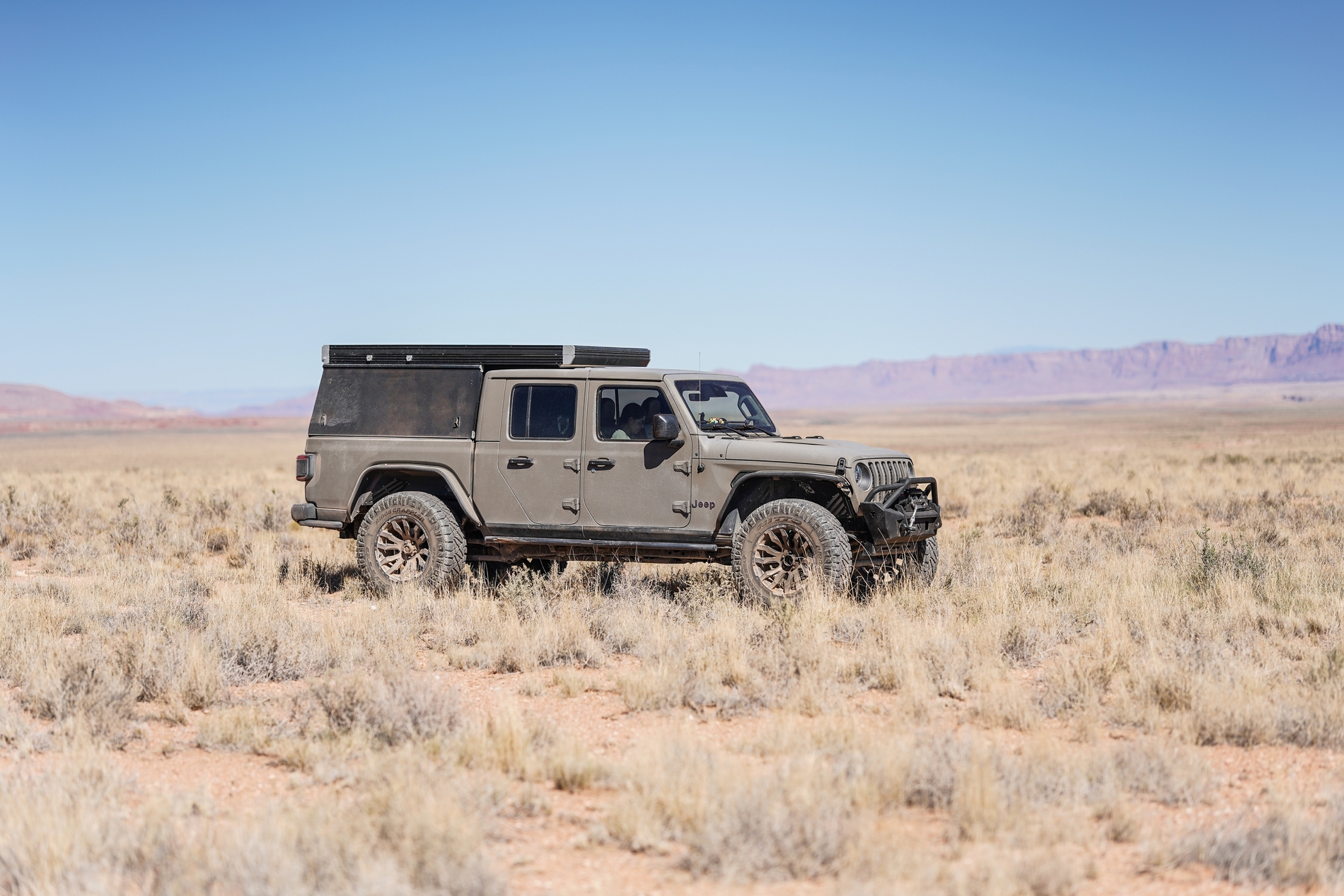
This is where the Rubicon makes the strongest case for itself.
It can crawl slowly over rocks and steep sections without me constantly fighting the throttle. The 4:1 low-range gears give the Rubicon the control I want when precision matters more than speed.
I have also found that the Wrangler’s shape works in its favor off-road. The short front and rear overhangs make it easier to place the vehicle around obstacles, while the high seating position gives me a good view of the trail.
If you opt for 35-inch tires, you can take it further. Jeep lists up to 12.9 inches of ground clearance and a 47.4-degree approach angle for the 2026 Wrangler with the appropriate 35-inch setup.
That is not just a number I would put in a specification table. I notice the difference when climbing over rocks, ruts, and broken sections where the front end needs to clear an obstacle without immediately hitting it.
The Four-Door Body Makes More Sense to Me
I would personally take the four-door Rubicon over the two-door if I had the option once again.
The longer wheelbase gives me much more useful interior space. I can carry passengers, recovery equipment, camping gear, and other trail essentials without turning the vehicle into a cramped two-seat adventure machine.
The trade-off is that the longer body is not quite as easy to place on very tight trails as the shorter two-door. But for me, the extra practicality is worth it.
The 2026 four-door Wrangler is 188.4 inches long, while the version with the 35-inch package stretches to 192.5 inches.
I would rather have a vehicle that can take my family and gear to the trailhead and then tackle the trail than own something that is slightly better in one tight section but less useful everywhere else.
It Also Handles Bad Roads Surprisingly Well
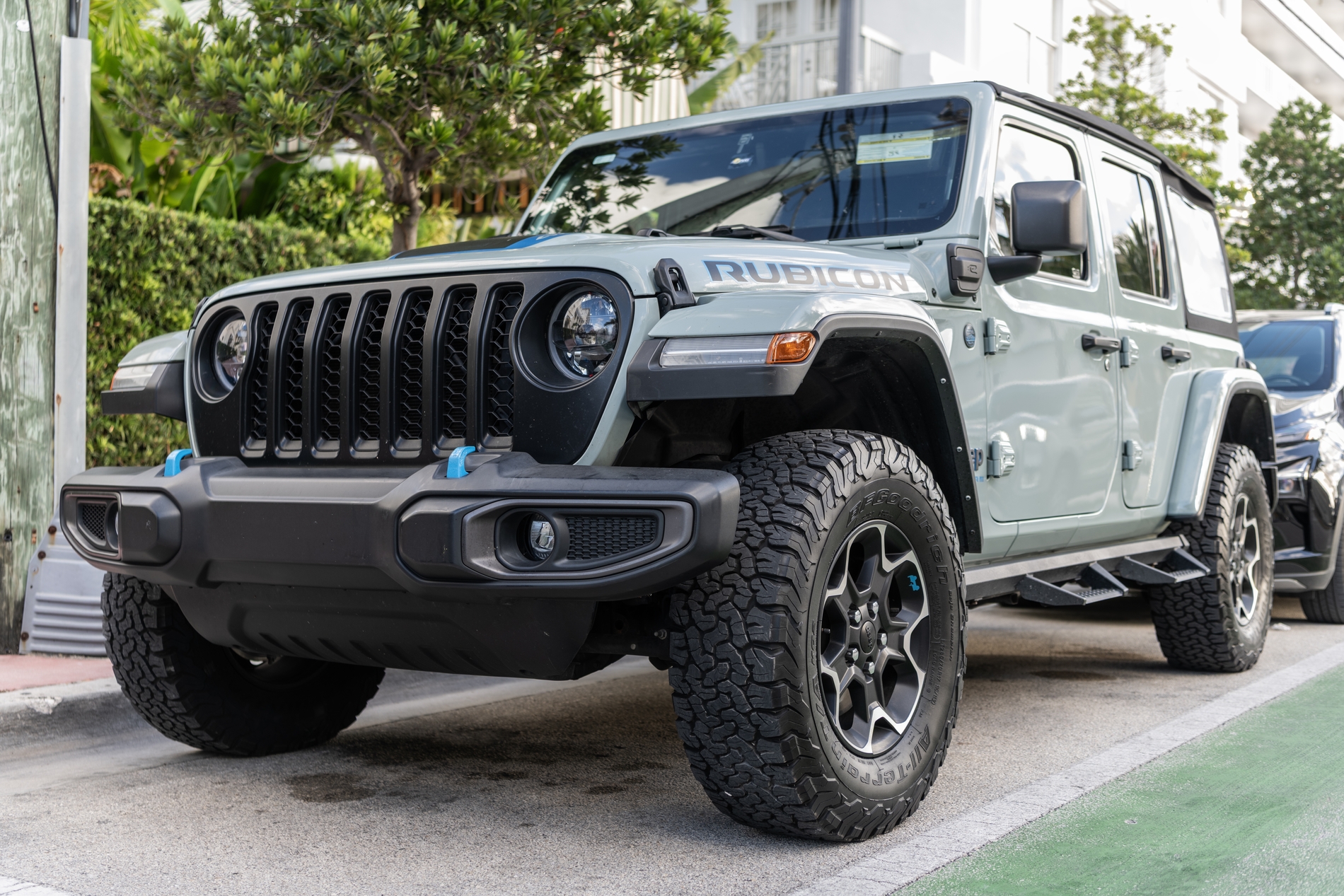
One thing that repeatedly stood out to me during long-term Wrangler testing is how well the suspension deals with genuinely poor roads.
I praise the suspension and tires for absorbing potholes and broken surfaces. The same suspension that helps it survive rough trails makes badly damaged roads surprisingly manageable.
The chunky tires are not particularly quiet on pavement, though. That is a compromise I notice immediately once I spend more time on highways.
The steering is another compromise. The Rubicon requires extra caution and frequent corrections at highway speeds. I would not buy a Rubicon expecting it to drive like a Toyota Highlander or a luxury SUV. That is simply the wrong expectation.
The Engine Is Good Enough, Not the Main Attraction

For 2026, the Wrangler offers a 285-hp 3.6-liter V6 and a 270-hp 2.0-liter turbo four-cylinder, depending on configuration. The turbo produces up to 295 lb-ft of torque.
I would not choose the Rubicon because of its acceleration.
The 2.0-liter turbo has useful low-end torque, while the V6 has the masculine character many Wrangler owners like. What matters more to me is how the powertrain works with the low-range gears and four-wheel-drive system when I am crawling over difficult terrain.
That is also why I would not obsess over 0-to-60 figures here. A sports SUV needs to be quick. A Rubicon needs to be controllable.
I Would Not Ignore the Ownership Downsides
This is where I would be careful before calling the Wrangler perfect.
Long-term owner experiences are inconsistent. Some owners report years of trouble-free use and praise the Wrangler’s durability, while others have experienced mechanical or electrical problems. Recent owner reports include both highly positive experiences and complaints about transmission leaks and other failures.
The long-term Top Gear test tells a similar story from another angle. After nearly a year and about 18,000 miles, the tester remained impressed by the Wrangler’s underlying toughness and capability but also criticized its fuel consumption, cabin quality and general refinement.
That is exactly how I would describe the ownership proposition.
I accept the compromises because I am buying the Rubicon for what it does exceptionally well. If I mostly drive on highways and never leave the pavement, I would choose something else.
Why I Still Pick the Rubicon
The reason is simple. I do not have to modify a Rubicon before I can take it seriously off-road. I get the lockers, low-range gearing, disconnecting sway bar, protective hardware, chunky tires, and the chassis needed to use them.
There are other excellent off-road SUVs. The Ford Bronco, Toyota Land Cruiser, and others can take you remarkably far. I would not pretend otherwise.
But if I want a four-door SUV factory-built for difficult off-road driving, the Wrangler Rubicon remains the benchmark I would start with.
It is not the quietest SUV. It is not the most comfortable. It is not the most refined. It is certainly not the vehicle I would recommend to someone who only wants an attractive family SUV.
But when the road disappears, and the trail gets genuinely difficult, I trust the Rubicon more than almost anything else I can buy in this class.
That is why, for my money, nothing can beat the 2026 Wrangler 4-Door Rubicon in off-road capability.