Cadillac Finally Got It Right With the 2026 Optiq
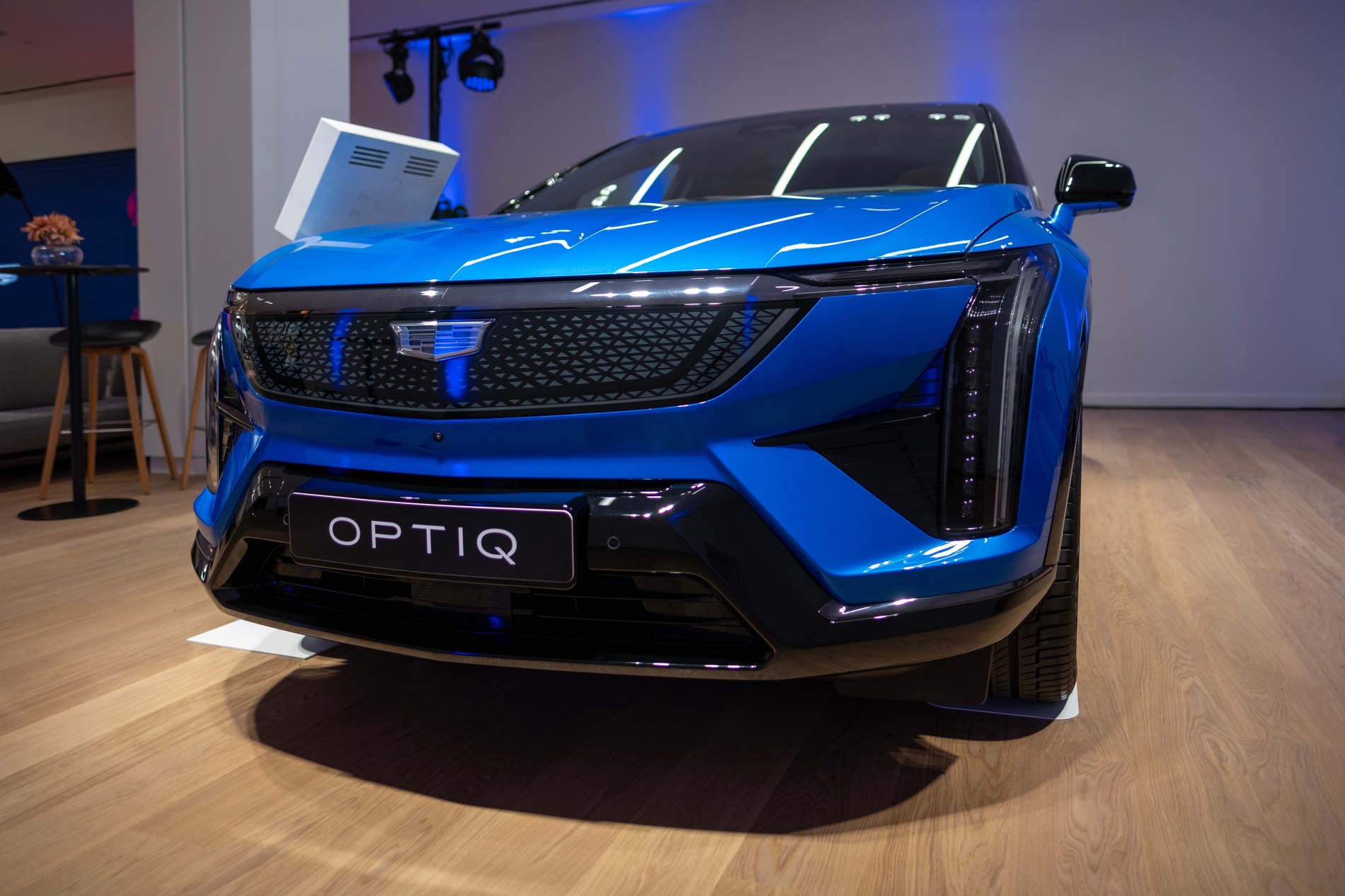
Cadillac Finally Built a Small EV That Carries the Cadillac Swag
The compact luxury EV space is exhausting right now. Every week, there’s something new, and most of it feels like the same car wearing a different badge. So when I got behind the wheel of the 2026 Cadillac Optiq, I wasn’t walking in ready to be impressed. I’ve spent time with the Tesla Model Y, the Genesis Electrified GV70, the Audi Q4 e-tron, and a handful of others in this segment. My bar is high. My patience for gimmicks is low.
So let’s talk about what the Optiq actually is before we get into how it feels to drive.
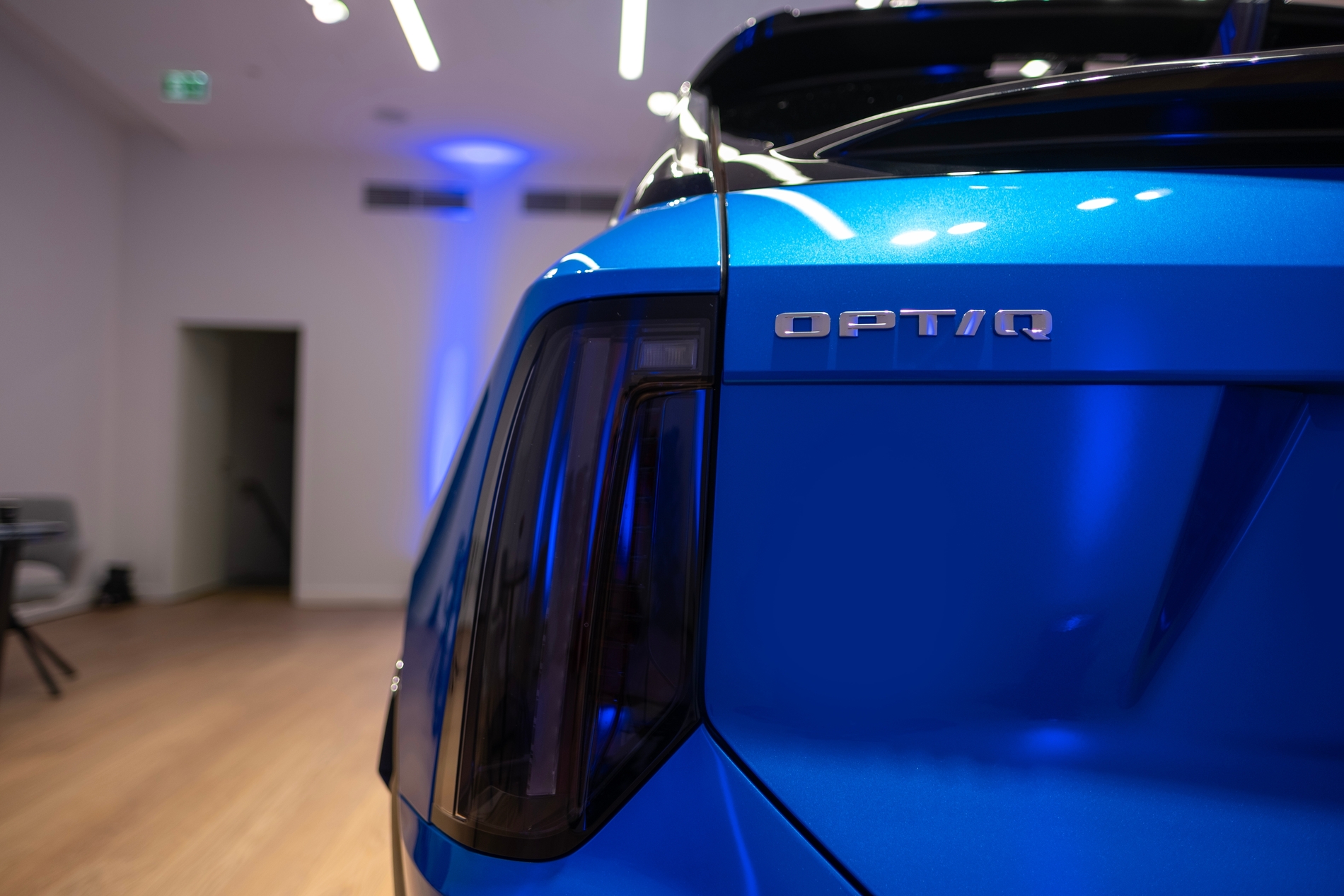
For 2026, Cadillac has shaken up the lineup quite a bit. The base model now starts at $50,900 and comes with rear-wheel drive, a single electric motor producing 315 horsepower, and an EPA-estimated range of 317 miles. In 2025, you were only getting AWD. If you want the dual-motor all-wheel drive setup, that’ll cost you extra, but you get a jump to 440 horsepower and 498 lb-ft of torque, with 303 miles of range. And then there’s the new Optiq-V, a proper performance variant with 519 horsepower, 650 lb-ft of torque, Brembo front brakes, and a claimed 0-60 mph in 3.5 seconds, starting around $69,000. All three share the same 85 kWh battery.
The one I had was the AWD dual-motor version. And that’s the one I’d tell most people to buy, by the way.
How It Drives
Every EV feels fast in the same boring way. You accelerate it, the torque hits like a wall, and your neck snaps back dramatically. The Optiq is quick, but that’s not the point. What caught my attention is how smooth the whole thing is. In the default Tour driving mode, the throttle response is genuinely well-calibrated. It doesn’t lurch. It doesn’t overshoot. You ask for a little, you get a little.
Around faster corners, the Optiq doesn’t feel like a 5,200-pound SUV and handles it well. The low center of gravity from the battery pack placement helps a lot here. Body roll exists, but it’s well-controlled. Cadillac spent real time tuning the dual-valve dampers in this suspension, because the ride quality on normal roads is genuinely comfortable.
The brakes are good. They feel natural and predictable, which is something I can’t say for every electrified vehicle I’ve driven.
One-pedal driving is where things get a little complicated. In its sensitive setting, the regenerative braking is strong enough that you’ll need a delicate right foot if you have passengers. I appreciated having the choice, but if you’re traveling with family, just leave it on a lighter setting.
The cabin is also impressively quiet. I barely hear highway noise and wind intrusion.
How It Looks
Outside, the Optiq is one of the better-looking compact SUVs on the market right now, and I don’t say that lightly. It doesn’t look like a spaceship, and it doesn’t look like a generic blob either. The proportions are right — 190 inches long on a 116-inch wheelbase. It is big enough to fit in the Cadillac heritage and small enough to fit in tight parking.
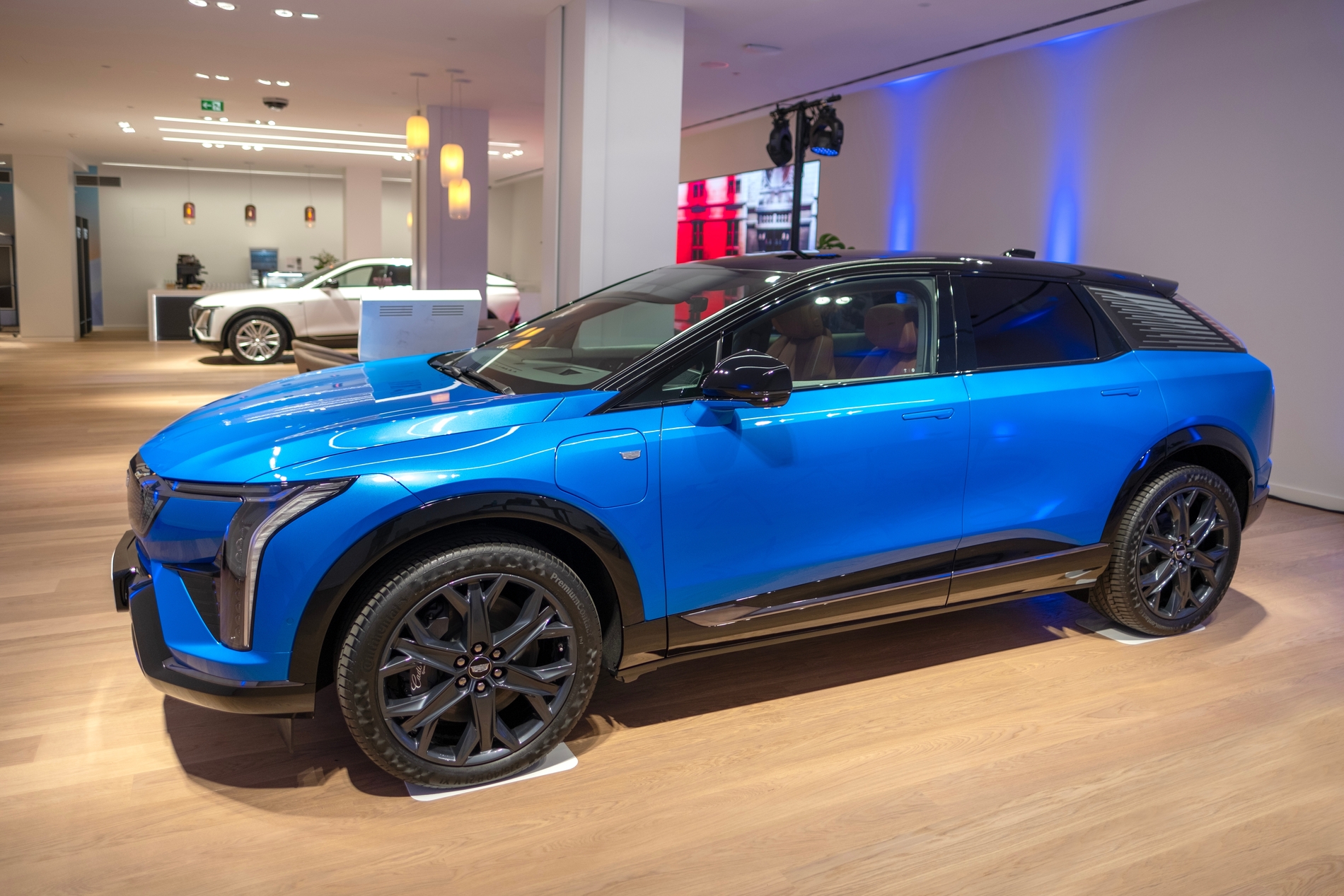
The sharp lighting signatures are distinctly Cadillac. The black lower trim gives it a bit of attitude without going overboard. There’s a striped detail on the rear quarter window that gives the whole car a sense of movement, even when it is parked.

The Interior
I’ve sat in a lot of cars that are described as “premium.” The Optiq is different. There’s a mix of materials here, including recycled textile accents, metal bezeling, and leather seating. Cadillac uses what they call PaperWood veneer, made from recycled newspaper and tulip wood. You can actually see faint traces of ink in the grain if you look closely. It looks interesting.
The front seats are plush and well-bolstered. Rear passenger space is decent, and nobody back there is going to complain on a highway drive. The cargo area behind the rear seats is 26 cubic feet. It is practical enough for daily life, though the sloping roofline does eat into it a bit. Surprisingly, there’s no front trunk. For an EV, that’s a missed opportunity.
View this post on Instagram
The 33-inch curved display across the dashboard looks excellent. It’s crisp, the menus are logical, and it doesn’t feel like a beta version of itself. Google Maps is built in, voice commands work well, and over-the-air updates will keep coming to improve over time. But for me, the most negative thing is that there’s no Apple CarPlay or Android Auto. I understand Cadillac’s reasons for going all-in on Google’s ecosystem, but a lot of buyers are going to feel that absence.
The 19-speaker AKG sound system with Dolby Atmos is standard across every single trim. That’s an unusually generous inclusion, and it sounds excellent.
Super Cruise, Cadillac’s hands-free highway driving system, also comes standard on every Optiq with a three-year subscription included. I used it, and it works well on highways and takes stress out of long drives.
The Issues
Nothing is perfect, and the Optiq has some flaws worth knowing about.
The DC fast charging maxes out at 150 kW. It’s not impressive by 2026 standards. Rivals like the Hyundai Ioniq 5 can charge considerably faster. Cadillac claims you can add about 79-81 miles in 10 minutes under ideal conditions, which is fine, but if you’re on a road trip and in a hurry, you’ll notice the slower top speed. The NACS port is now standard, which means access to Tesla’s Supercharger network, but the underlying charging hardware still lags.
The glossy haptic touch controls pick up fingerprints immediately. You’ll have to keep a microfiber cloth in the center console. Cargo space, as mentioned, is limited by the roofline, and the lack of a frunk is a genuine waste of an opportunity.
Is It Worth the Money?
The base RWD model at $50,900 is worth the value if range is your priority. 317 miles is excellent, and having Super Cruise and the AKG audio system standard is impressive. But I’d spend the extra on the AWD dual-motor trim. The jump to 440 horsepower matters especially if you ever want to merge onto a highway, and the slight range drop to 303 miles is easy to live with.
I have also used the Tesla Model Y, but the Optiq wins on interior quality, cabin refinement, and the overall drive feel. Tesla still wins on charging network familiarity and probably resale, but the Cadillac is a more satisfying car to spend time in. Against the Genesis Electrified GV70, which starts at $64,380 in the US, the Optiq offers more power, more range, and costs noticeably less.
The Optiq-V is tempting if you want serious performance, but you’re paying around $69,000 and giving up range. For most buyers, the regular AWD model is the sweet spot.