Is the Audi Nuvolari the Future of Audi Performance Cars?
The fastest and most powerful production vehicle Audi has ever built.
Audi unveiled the Nuvolari on June 4, 2026, in Antibes on the Côte d’Azur, just ahead of the Monaco Formula 1 Grand Prix. The timing was deliberate. Audi’s F1 drivers, Nico Hülkenberg and Gabriel Bortoleto, drove the car to the public after testing it.
The motoring world was expecting another electric concept prototype. Instead, Audi rolled out a production-ready supercar.
Just six days after the reveal, the Nuvolari arrived at the Nurburgring for testing. It was spotted outside the Green Hell, heading toward the track. The prototype was wearing camouflage, which is puzzling since the car has already been fully revealed.
The Name and Its History
The name pays homage to Italian racing driver Tazio Nuvolari, who competed for Auto Union, the forerunner of today’s Audi. He was so revered that Ferdinand Porsche called him “the greatest driver of the past, the present, and the future.”
This is not the first time Audi has paid tribute to Nuvolari. In 2003 at the Geneva Motor Show, the Nuvolari quattro concept previewed a design language that appeared in models like the first-generation A5, and it also previewed the V10 engine that later powered the original R8. The 2026 Nuvolari is a bigger tribute. It is an actual car you can buy.
The Lamborghini Connection
The Nuvolari shares the Lamborghini Temerario’s platform, using the same aluminum spaceframe chassis and the same 4.0-liter twin-turbo V8 that revs to 10,000 rpm. That engine figure alone is worth pausing on. Most road car engines peak at 7,000 to 8,000 rpm, whereas 10,000 rpm is motorsport territory.
This Audi-Lamborghini sharing is nothing new. Just as the R8 initially shared its foundations with the Gallardo, and then the Huracan for the second generation.
Sources say the Nuvolari has the Temerario’s gearbox and steering. But Audi adds a more powerful electric system, a new body, new technology, and 80 horsepower more than the Temerario.
The Numbers
The Nuvolari combines a 4.0-liter V8 producing 800 PS with three axial flux electric motors, each generating 110 kW, for a total system output of 736 kW (1,001 PS). The two front-axle electric motors alone deliver up to 2,150 Nm of torque.
Combined, that comes to 987 horsepower. That figure outpunches the Temerario by 80 hp and takes the crown as the most powerful Audi ever built, a title previously held by the RS e-tron GT Performance. Coincidentally, 987 hp also ties the number the original Bugatti Veyron launched with in 2005.
0 to 62 mph takes 2.6 seconds. Top speed is over 217 mph. The battery has a gross capacity of 7.3 kWh, nearly twice that of the Temerario’s 3.8 kWh pack, and enables fully electric driving over short distances.
Technology: F1 Comes to the Road
Audi CTO Rouven Mohr said: “Formula 1 is a key impulse to bring innovations to the road quickly and with precision.” Several systems on the Nuvolari back that claim up.
The headline is a new system called Quattro Predictive Ride, which continuously analyzes steering inputs, acceleration, yaw rate, and tire grip levels to anticipate potential traction loss before it occurs. The system coordinates the electric motors, brakes, and aerodynamic components as a unified network. Energy recuperation, launch control, and torque management all draw directly from F1 technologies.
In terms of aerodynamics, a deployable rear wing automatically adjusts between three positions. Drivers can also manually reduce drag via a DRS button on the steering wheel during high-speed driving, as in Formula 1.
The front of the car features a Vertical Frame made of 64 precisely angled tiles that channel airflow through a concealed S-duct. The complete aerodynamic package can generate more than 400 kilograms of downforce in its highest-performance configuration.
Braking uses a brake-by-wire setup that precisely balances hydraulic braking and electric deceleration. The front uses 10-piston fixed-caliper carbon brakes, and Audi claims the brake cooling represents a 21% improvement over conventional carbon-ceramic systems.
There are four driving modes:
- E-Hybrid for electric-only use
- Balanced for everyday driving
- Dynamic for sharper response
- Dynamic+ for a full performance
For the track, a separate Track Mode enables precise adjustment of traction control settings from Wet to Dry, and from Race all the way to TC Off.
The Design and What It Signals
View this post on Instagram
The Nuvolari is the first production Audi to fully embody the brand’s new design language. Audi calls this philosophy “The Radical Next,” built on four principles:
- Clear
- Technical
- Intelligent
- Emotional
It was first previewed in the Concept C electric sports car last year.
Almost all exterior components are made from carbon fiber-reinforced polymer. The architecture combines Audi’s Space Frame technology with a carbon exterior, which is a first for the brand. The Nuvolari has no rear window. Instead, side-mounted air intakes supply the engine. Four horizontal LED lighting elements appear at both the front and rear.
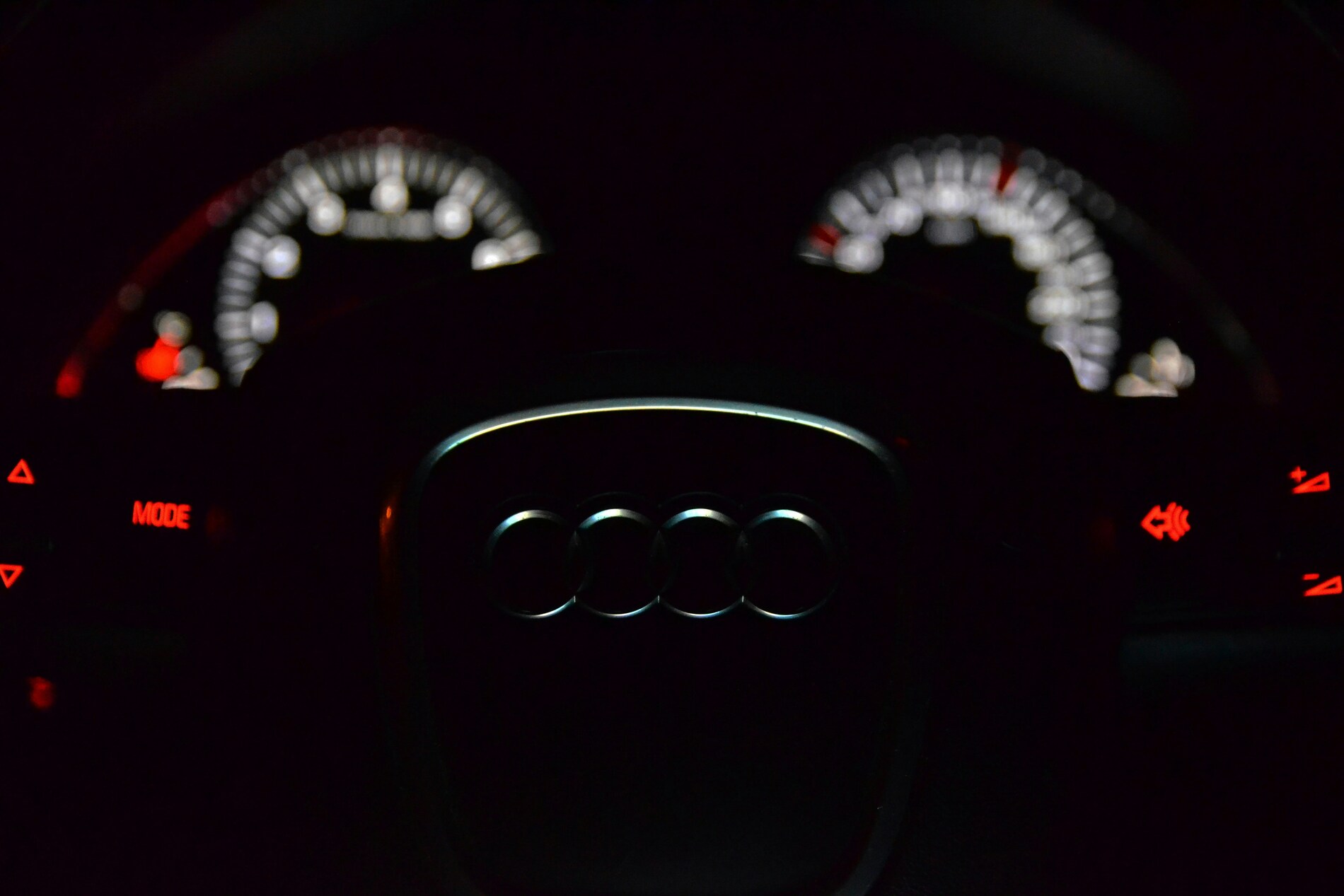
Inside, a central portrait touchscreen pairs with aluminum physical controls, and the instrument cluster features a circular display with design nods to the 1930s Auto Union Type C race car.
Price and Availability
Audi has not confirmed a price. With estimates placing it upwards of half a million pounds or around $670,000, the Nuvolari takes Audi into near-million-dollar hypercar territory for the first time. Deliveries for all 499 units begin in the first half of 2027.
So, Is It the Future of Audi Performance Cars?
The Nuvolari is a halo car. Its job is to set the ceiling. Prove what is possible. Make people believe in the brand again. At 499 units, it will never be a volume product. But the design language, the hybrid powertrain direction, and the F1-derived technology it carries will appear in cars that are. That is how halo cars work. You build one extreme thing, and everything below it gets pulled upward.
Audi has not built a mid-engined supercar since the R8 ended in 2024. It took two years and a name from the 1930s to come back. The statement is clear enough.