How Tough Is the Subaru Forester Wilderness 2026?
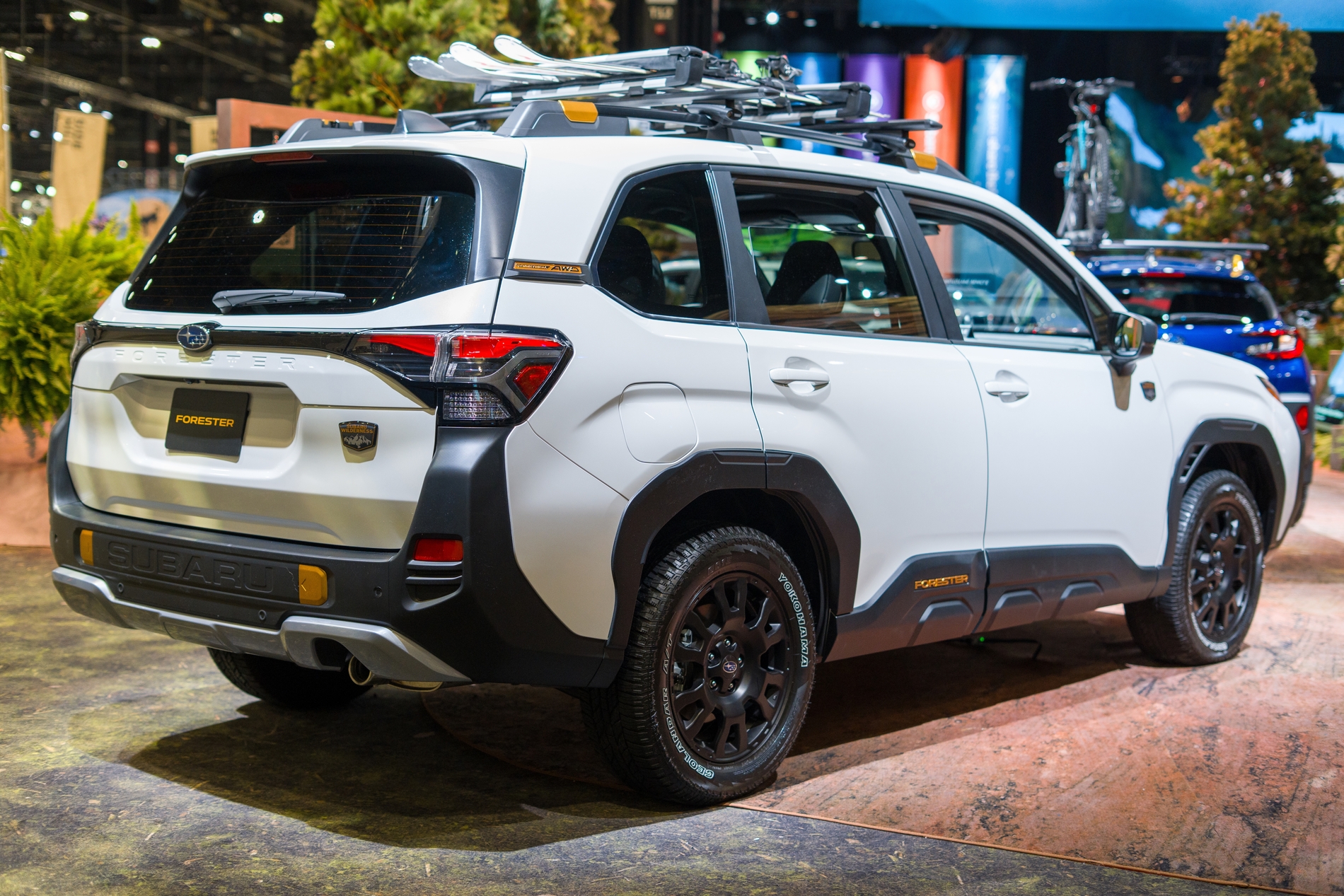
Subaru built the Wilderness trim to prove a compact crossover can also survive trails.
After spending time with the redesigned 2026 Subaru Forester Wilderness, my take is simple, but I have a lot to say. It is genuinely tough for what it is.
This SUV has enough ground clearance, good approach and departure angles, and all-terrain tires that work adequately off-road. It will out-climb almost every other compact crossover on sale, including ones with more aggressive looks. It will not out-climb a Bronco or a Wrangler, and Subaru never claimed it would.
How it Looks From the Outside

The Forester Wilderness look works because it is not just paint and stickers. Subaru reshaped the bumpers, wrapped the cladding further around the lower body, and added anodized copper accents on the grille, tow hooks, and badging.
Wheels drop to 17 inches, which sounds like a downgrade, but it actually allows tires with thicker sidewalls to fit for better flex over rocks and ruts.
Roof rails are rated for 800 pounds when parked, enough for a rooftop tent on a weekend trip. I noticed that the rated roof load capacity is slightly lower this year than on the previous generation.
Life Inside the Cabin
Sit inside, and the cabin feels like a return to something simple and durable rather than flashy. The interior will likely get dirty, and I do not mind. You will get:
- Water-resistant StarTex upholstery
- A rubber cargo mat
- All-weather floor mats
- Nearly 40 inches of rear legroom
Seat comfort is good for long stretches. The driving position is upright with a clear view out every window, a Forester trademark that carries over here. The back seat is not an afterthought either, which matters if you’re regularly hauling passengers along with gear.
Screens, Software, and Tech
I would criticize the 2026 Subaru Forester Wilderness here.
This car comes with an 11.6-inch touchscreen running Subaru’s Multimedia Plus system. Multiple testers described it as slow to wake up after startup and not great at understanding voice commands.
One journalist driving a new unit found the screen froze for the first few minutes. Most people who spend time with the system just run wireless Apple CarPlay or Android Auto and treat the native software as a backup.
Opinions are split on the physical controls around the screen. Some owners like that volume, tuning, and climate still have buttons nearby. Others who tested the newest software wish for more dedicated buttons and fewer menu taps. Me too!
However, you can opt for the options package, which includes a 12.3-inch digital gauge cluster with Wilderness-specific graphics, built-in navigation, and an upgraded Harman Kardon sound system that’s a genuine step up from the base speakers.
Behind the Wheel
On pavement, the Forester Wilderness drives like a taller, slightly firmer version of a normal Forester. Steering is light at low speed and becomes a bit heavier as you speed up. The extra height and knobbier tires do change the character a little.
Where this vehicle changes personality is the moment pavement ends.
The taller suspension, the wider Yokohama Geolandar all-terrain tires, and the dual-mode X-Mode traction system work together to keep you moving over loose gravel, mud, and washouts that would stop a standard crossover.
I drove it on logging roads and mountain trails in the Pacific Northwest it kept climbing well past the point where I expected to stop, right up until it eventually met an obstacle too steep and too vertical for any compact crossover to handle.
The Forester Wilderness leans a bit in corners, which is normal for a taller SUV with raised suspension and all-terrain tires. Those off-road upgrades also create a little more tire noise on the highway and make the ride slightly firmer than other Forester trims. That’s expected, though. The Wilderness is built for off-road capability, not sporty handling, and it does that job well.
What’s Under the Hood
The powertrain is the same across all Forester trims:
- 5-liter boxer four-cylinder engine producing 180 horsepower, 178 lb-ft of torque
- CVT transmission (Lineartronic), with a shorter final drive ratio on the Wilderness for better low-speed control off pavement
- 0 to 60 mph in 9 seconds
- No hybrid or turbo option is available on this trim
That shorter final drive genuinely helps when you’re picking your way over rocks.
On the highway, though, this is the vehicle’s weakest link by a wide margin. Nearly every reviewer flagged the power as inadequate for confident overtaking.
Fuel Economy
The EPA rates the 2026 Forester Wilderness at:
- 24 mpg city
- 28 mpg highway
- 26 mpg combined
That’s slightly lower than the standard AWD Forester, which gets about 29 mpg combined. If saving fuel is your main goal, the Forester Hybrid is a better choice. However, Subaru doesn’t offer a Wilderness Hybrid, so you have to choose between better fuel economy and better off-road capability.
Reliability and Ownership Considerations

The old-gen Forester earned a strong reputation for reliability, with many owners driving well past 150,000 miles. Its main known issue was a thermo control valve problem on 2019–2021 models, which Subaru later fixed. The 2026 Forester is built on a new platform, so its long-term reliability is still being proven. Early reports rate it as good to average, though it has already been recalled due to a bonding issue with the moonroof glass. Subaru also tends to have higher-than-average maintenance costs, but the Forester usually holds its resale value well.
Who Should Buy It
The 2026 Subaru Forester Wilderness is a great choice for campers, hikers, kayakers, and anyone who regularly drives on rough roads or trails. It also works well for towing a small trailer without having to upgrade to a larger SUV or truck.
If you want serious rock-crawling performance or quicker on-road driving, a Bronco, Wrangler, or even a standard Forester may suit you better. Overall, the Forester Wilderness delivers genuine off-road capability in a compact SUV, with its engine, infotainment, and fuel economy being the main tradeoffs.