How To Put an Automatic Car Into Neutral When It Won’t Start
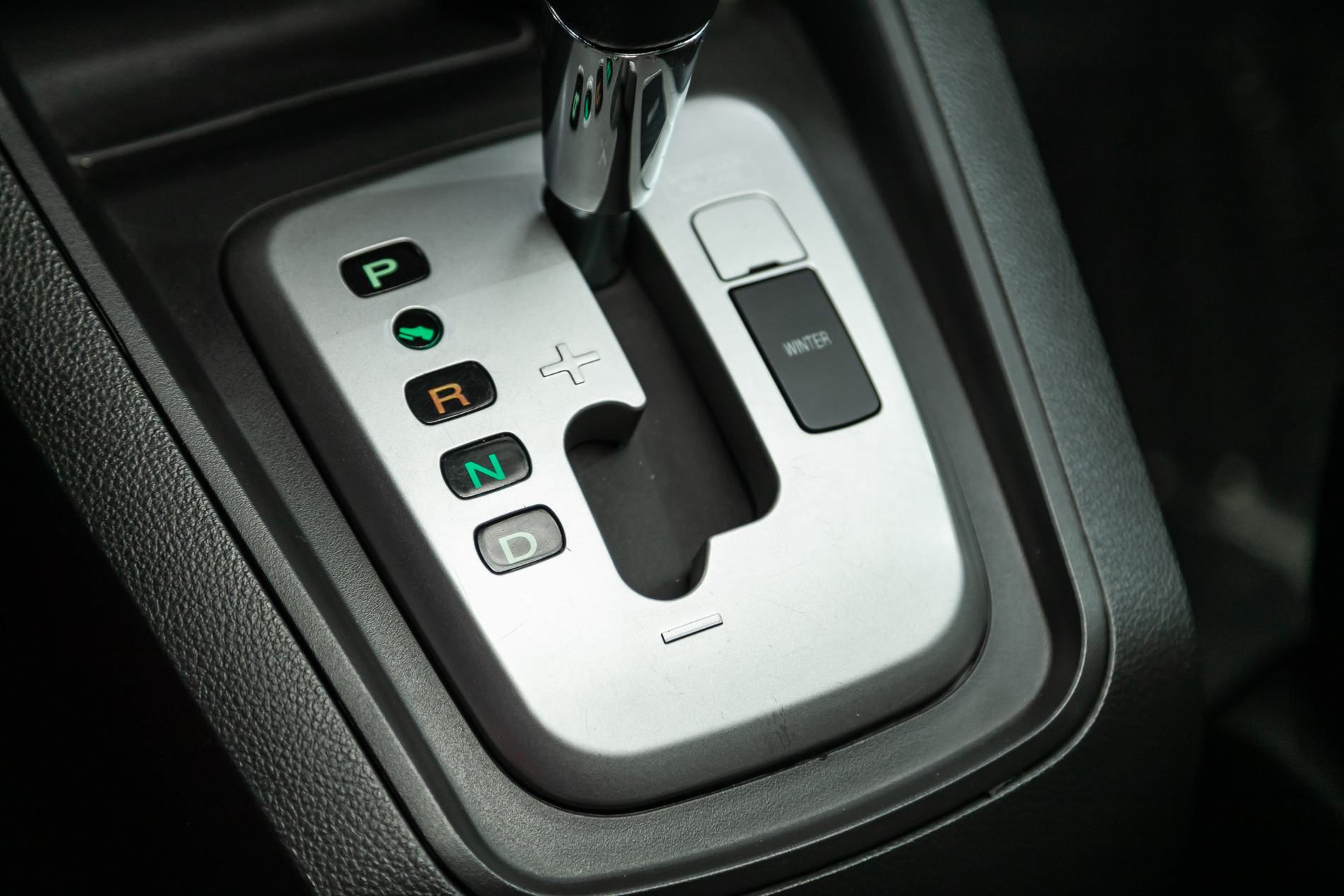
A dead battery does not have to leave your car stuck in (P) Park.
If your automatic car won’t start because of a dead battery, you may still need to move it. It might be blocking a driveway, sitting in a road intersection, or you may want to load it onto a tow truck. But a dead battery doesn’t just stop the engine; it can also lock the gear shifter because the electronic system that lets you shift needs power to work.
Today, we’ll show you how to shift your automatic car into (N) Neutral from (P) Park when the battery is dead so you can push it freely.
Why an automatic car locks in parking gear
Automatic transmissions built for the U.S. market use a safety feature called a Brake-Shift Interlock. A federal safety rule adopted in 2010 requires it on new vehicles to prevent the transmission from shifting out of (P) Park by accident or rolling away unattended.
The interlock needs pressure on the brake pedal and electrical power to release the shifter. A solenoid holds a small pin in place that physically blocks the shift lever or dial from moving. When the battery is dead, that solenoid has no power, so the pin stays locked, even if you press the brake pedal as hard as you can. This is not a malfunction. It is the safety system working exactly as designed. You need to release it manually.
What you need before you start the process
- A small flathead screwdriver, or the metal blade of your car key. Many modern key fobs hide a small metal blade inside them for situations like this.
- Your owner’s manual. The exact location and direction of the shift lock release button vary by manufacturer.
- A second person, if you plan to push the car. One person should stay in the driver’s seat to steer and brake while another pushes.
Safety precautions to take first
Once the shifter moves to (N) Neutral, the transmission no longer holds the car in place. The vehicle can roll on its own, even on a slight slope. Take these precautions before you touch the shift lock release button:
- Set the parking brake before doing anything else.
- Place wheel chocks or bricks against at least one tire.
- Do this on level ground if possible. Avoid attempting this on a hill or sloped driveway.
- Keep the driver’s door closed and the seatbelt fastened because on some newer vehicles, opening the door or unbuckling the seatbelt can trigger the transmission to shift back into (P) Park automatically.
- Never leave the car unattended in neutral.
Step-by-step: using the shift lock release
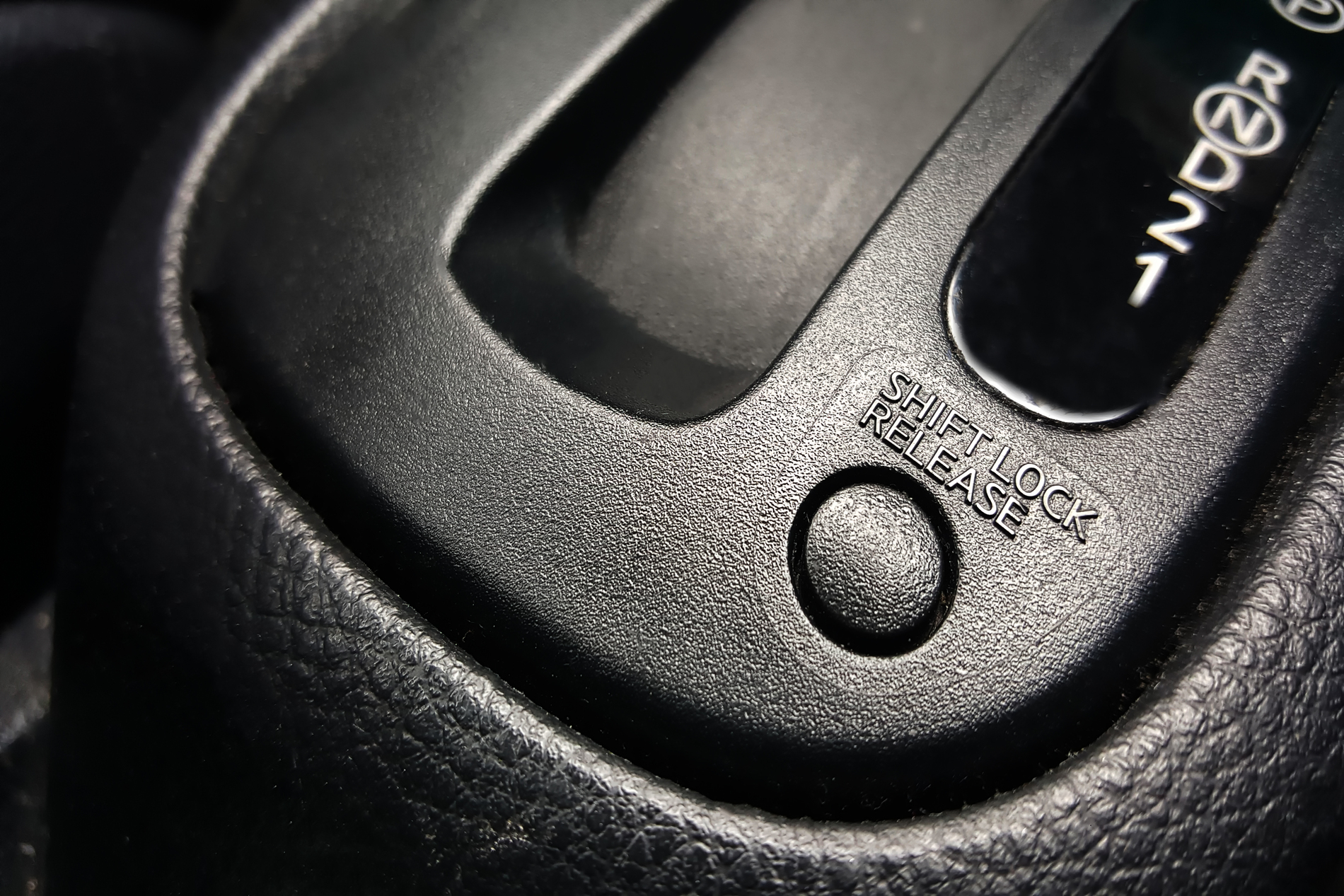
- Turn the key to the “On” or “Accessory” position, if the ignition responds at all. This is not required on every vehicle, but where it works, it powers the steering column lock and other systems that make the next steps easier.
- Locate the shift lock release button. On most vehicles, it is a small slot or covered button next to the gear shifter, near the base of the lever or dial. Many manufacturers mark it with a small icon showing a shift lever and an arrow pointing at a padlock.
- Remove the cover, if present, by gently prying it off with a flathead screwdriver or a plastic trim tool. Set it aside so you can put it back later.
- Insert the screwdriver or the metal end of your key into the slot. Push it down or over, depending on your vehicle, until you feel it click or catch.
- Press the brake pedal firmly with your other foot while holding the shift lock release button engaged.
- Move the shifter into neutral. On a lever, this usually means holding down the button on the shift knob while sliding it. On a rotary dial, turn it toward (N) while the shift lock release button stays engaged.
- Once the shifter is in neutral, release the button and put the cover back in place.
How the process differs by shifter type
Column-mounted shifters
On a lever mounted to the steering column, you may find the shift lock release button usually at the base of the lever, under a small cover. You typically push or pull it toward the dashboard while moving the lever to (N).
Console and floor shifters
On a lever or dial mounted in the center console, the shift lock release button is usually behind a plastic panel next to the shifter. You have to push it forward or press it down while moving the shifter.
Push-button and rotary dial shifters (Shift-By-Wire)
Push-button and rotary dial shifters use an electronic system, called Shift-By-Wire, instead of a mechanical cable connected to the transmission. Because there is no direct mechanical link, some of these systems need a small amount of electrical power to move, even with the shift lock release engaged. If your battery is completely dead, connecting a portable jump starter or jumper cables for a minute or two, without necessarily starting the engine, can supply enough power to shift electronically.
That said, not every Shift-By-Wire vehicle requires power. Several manufacturers, including some new Ford models, also build a purely mechanical override slot into their electronic shifters. So check your owner’s manual before assuming you need a jump starter.
If you can’t find or use a manual override
Not every vehicle makes the shift lock release button easy to reach. Some require removing a trim panel, and some may not have one. If you cannot locate the release button, or the shifter still does not move even after engaging the button, try these:
- Try a portable jump starter to add a small charge to the battery, even if you do not start the engine.
- Check your owner’s manual for the exact procedure for your vehicle. Manufacturers are required to document it.
- Call a professional towing service. Tow operators carry the tools and have the knowledge to release the transmission without damaging it.
When you no longer need to move the car, you can shift back into (P) Park using the same manual release, or normally once power is restored.