How to Replace a Blown Fuse in Your Car
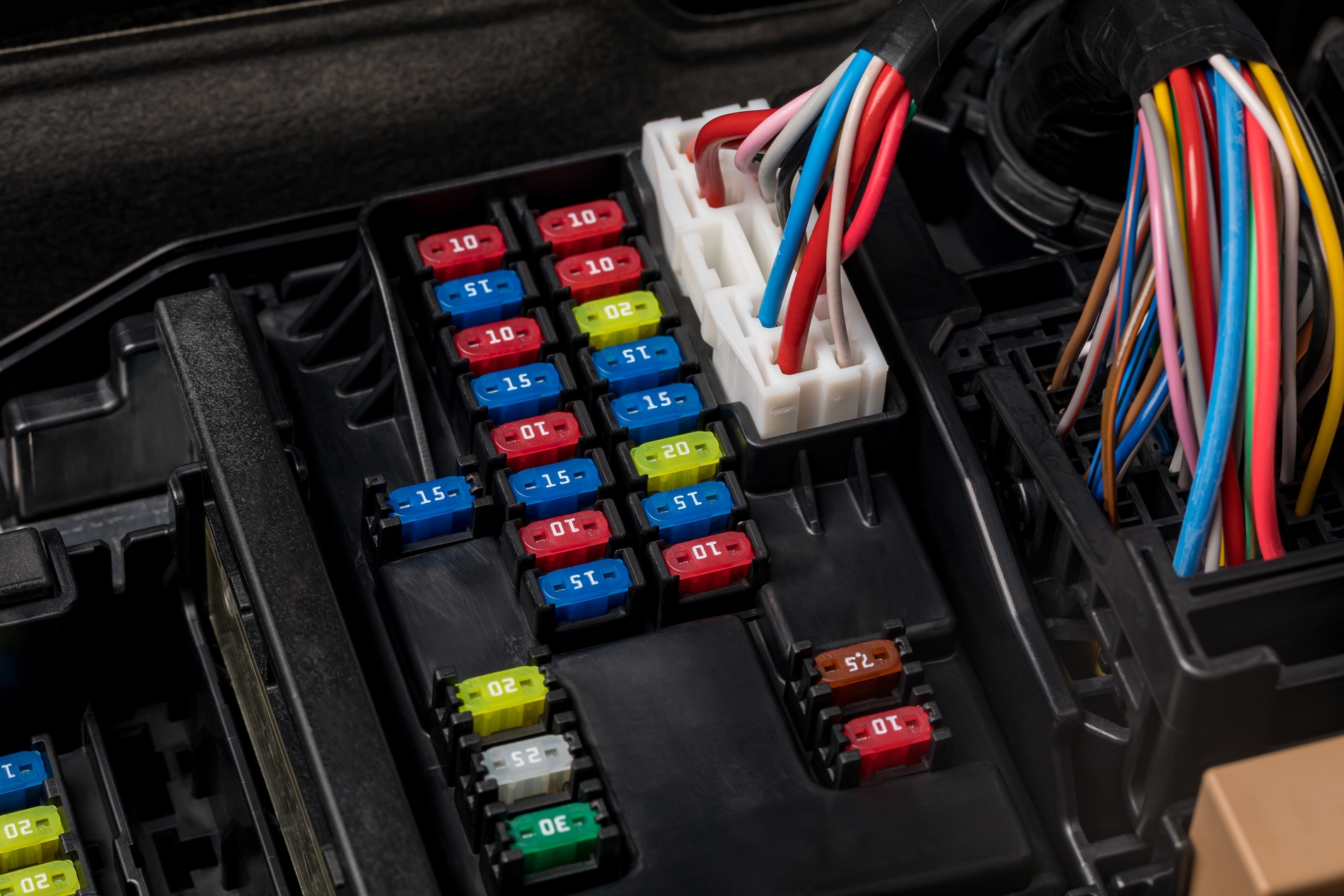
One blown fuse can kill your car radio, power windows, or headlights, and fixing it costs less than a coffee. And you can do it yourself in under ten minutes.
Every circuit in your car’s electrical system has a fuse sitting in front of it. Inside the fuse is a thin metal strip rated to pass a specific amount of current. If any component pulls more current than that strip can handle, the strip melts and breaks the circuit. That sacrifice protects the wiring, the connected component, and the rest of the electrical system from overheating, melting, or starting a fire.
The Types of Fuses You Might Run Into
Almost every car built since the late 1970s uses blade fuses (also called spade fuses), which have a plastic body with two flat metal prongs sticking out the bottom. Older cars and some European models also use glass tube fuses or ceramic Bosch-style fuses with conical metal ends, but blade fuses dominate modern vehicles. Within the blade fuse family, there are several sizes, such as:
- Micro2 and Micro3 – the smallest, and are used in newer vehicles. Micro3 has three prongs instead of two and protects two circuits from a single fuse.
- Low-profile Mini – short and compact, commonly used in many Japanese and some European cars.
- Mini – similar footprint to low-profile mini but taller prongs; currently the most common fuse in passenger vehicles.
- Regular/Standard (ATO or ATC) – the original blade fuse size, still widely used.
- Maxi – the largest blade fuse, used for high current drawing circuits like cooling fans or power windows.
Each one is color-coded by amperage, and the amp rating is printed on top of the fuse itself. You must replace a fuse with the exact same physical type and amperage. A fuse with a higher rating won’t blow when it should, killing the entire purpose and potentially allowing a wire to overheat.
When You Should Check the Fuse Box
Any time an electrical component stops working suddenly with no warning, like a stereo cutting out, power windows refusing to move, or a turn signal that won’t blink, check the fuse box. It’s also worth checking first whenever several components fail collectively, since a single fuse often protects more than one circuit. And it’s the cheapest thing to rule out before you assume something bigger is wrong, like a burned-out motor or a faulty switch. The symptom is what tells you which fuse to look for later, so keep it in mind.
Step-by-Step Blown Fuse Replacement Process
1. Turn off the engine and remove the key.
Stay away from the radiator fan and any drive belts in the engine bay, since some fans can switch on by themselves even with the engine off. You can disconnect the negative battery terminal to eliminate risk; just keep in mind that this will reset your radio presets, clock, and any other memory settings.
2. Find the fuse box.
Most cars have two fuse boxes: one inside the cabin, usually under the dashboard near the steering column or behind the glovebox, and one under the hood near the battery. Your owner’s manual will tell you exactly where each one is and which fuse box handles which systems. If you don’t have the manual, a quick Google search for your car’s year, make, and model will tell you the exact location.
3. Match the symptom to a fuse using the diagram.
The inside of the fuse box lid usually has a printed diagram showing which fuse number corresponds to which component, such as the radio, headlights, or power windows. Find the fuse associated with whatever component stopped working, based on the symptoms.
4. Pull that fuse and inspect it.
Grip it with the fuse puller or pliers and pull it straight out, rocking it gently side to side if it’s stuck. Hold it up to a light, and inside the translucent plastic body, you’ll see the thin metal strip connecting the two prongs. If that strip is intact, the fuse is fine, and the problem lies elsewhere. If the strip is broken, melted, or the inside looks scorched, the fuse has blown.
5. Install the replacement.
Line up the prongs on the new fuse with the slot, then push it straight in by hand until it sits the same way the old one was seated. Don’t force it at an angle, as blade fuses are brittle and prone to cracking. Reconnect the battery if you disconnected it, then turn the ignition on and test the component that wasn’t working.
If the New Fuse Blows Right Away
If the fuse blows again immediately or very soon after replacement, it indicates that something downstream is still pulling too much current, such as a short in the wiring, a failing component, or water intrusion into a connector. Repeatedly swapping fuses won’t fix that and will keep costing you fuses. At that point, take the car to a mechanic who can diagnose the hidden fault.
A Few Practical Tips
Keep a few spare fuses that fit your car in the glovebox, so you can replace a blown fuse on the road. Never substitute a higher-amperage fuse just to stop it from blowing again. And if you’re ever unsure which fuse controls what, trust the diagram on the fuse box cover over guesswork, since pulling the wrong fuse can disable something that was working perfectly fine.