Mercedes Is Dealing With Two Big Problems Right Now
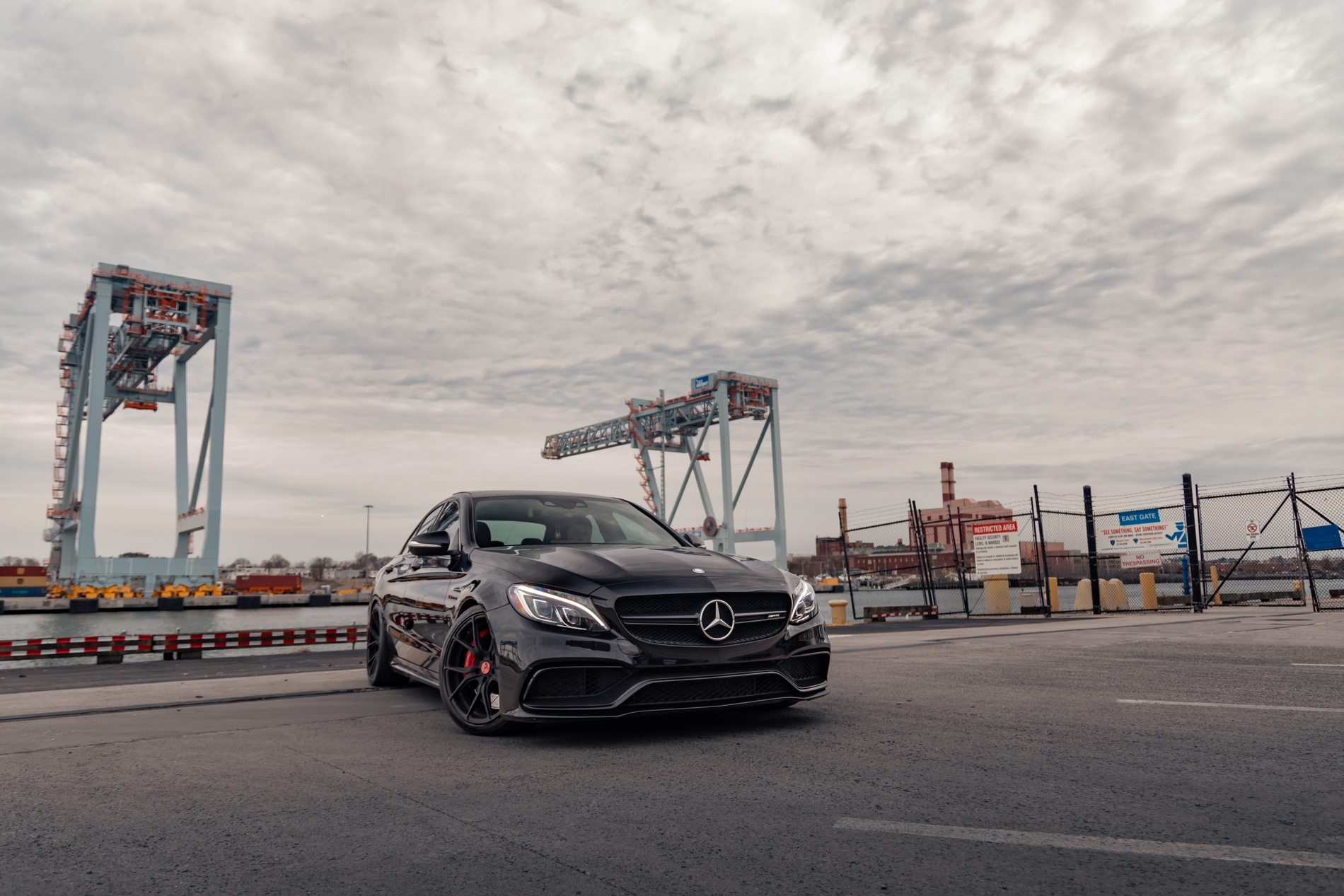
Mercedes faces a possible U.S. sales ban and still has no V8 for the C63 sedan and E63 wagon.
One is political and could affect whether the automaker can keep selling cars in the United States. The other is about engineering and affects one of its most important performance models. Neither problem is Mercedes’ fault, but both show how much pressure the brand is under right now.
Problem One: A Possible Sales Ban in the U.S.
On July 22, the U.S. Senate Commerce Committee approved a bill called the Connected Vehicle Security Act. The bill is meant to keep Chinese-linked vehicles and technology out of the U.S. market. It also includes a separate rule that limits Chinese ownership in any automaker selling cars in the country to 15%.
That ownership rule is where Mercedes runs into a problem. The company’s two largest individual shareholders are Chinese. State-owned automaker BAIC holds a 9.98% stake, and Geely founder Li Shufu holds another 9.69% through an investment vehicle. Combined, Chinese ownership of Mercedes sits at close to 19.67%, which is above the bill’s 15% limit.
Senator Ted Cruz, who chairs the committee, said the bill needs to be changed before it becomes law. He said, “We would never consider” banning Mercedes-Benz, and added that General Motors appears to support the ownership rule as written. Cruz suggested GM’s goal is to weaken Mercedes and make Cadillac more competitive in the luxury market.
Senator Bernie Moreno, who co-sponsored the bill, said Mercedes would have until 2030 to meet the ownership limit if the rule stays as written. He also said the company could apply for a waiver.
The numbers explain why this matters so much to Mercedes:
- The company employs more than 11,000 people at its U.S. operations.
- Its assembly plant in Tuscaloosa, Alabama has built more than 4.5 million vehicles since it opened in 1997.
- The bill’s core provision would block Chinese-linked connected vehicles starting in January 2027. The ownership rule affecting Mercedes is a separate part of the bill and is still being negotiated.
The legislation still has to pass the full Senate and the House before it can become law. Based on Cruz’s comments, the 15% ownership threshold will likely be adjusted. But the situation shows how exposed Mercedes is to U.S. trade and national security policy, even when the rule was not written with a German automaker in mind.
Problem Two: The V8 C63 Still Isn’t Ready
The second problem is smaller, but it matters to Mercedes’ most loyal customers.
For years, the AMG C63 was known for its V8 engine. The current generation replaced that V8 with a turbocharged four-cylinder hybrid, and the change was not popular. Mercedes has since confirmed the four-cylinder C63 will be discontinued. The company points to new European emissions rules as the main reason, though it has also admitted it misjudged how willing customers would be to accept a four-cylinder engine in this model. Its replacement, a new C53, will use a six-cylinder engine instead of a V8.
Mercedes-AMG has developed a new V8 for other models. It is a 4.0-liter engine with a flat-plane crankshaft, and it already powers the updated S-Class, where it produces up to 530 horsepower and 553 pound-feet of torque in the S580 trim.
That engine is expected to reach AMG’s large SUVs first. A Mercedes-AMG executive recently said the engine still needs more development work before it can be used in a car like the C63. The V8 is more likely to appear next in the CLE63, which could arrive around 2027. Whether it eventually comes back to the C-Class, and when, is still unclear.
Where This Leaves Mercedes
These two problems are unrelated in cause, but they point to the same broader issue. Mercedes is dealing with decisions outside its direct control. In one case, it is U.S. government policy. In the other, it is engineering timelines for a new engine platform. Both are shaping how the brand operates in the U.S. and what its most important products will look like in the next few years.
Neither problem is fatal on its own. The Senate bill will likely be revised before it becomes law, and the V8 C63 question is more about timing than whether it happens at all. Still, for a brand built on consistency and performance credibility, both stories add up to a period of real uncertainty.