Porsche’s 2035 Plan Includes a Mid-Engine Supercar and New SUVs
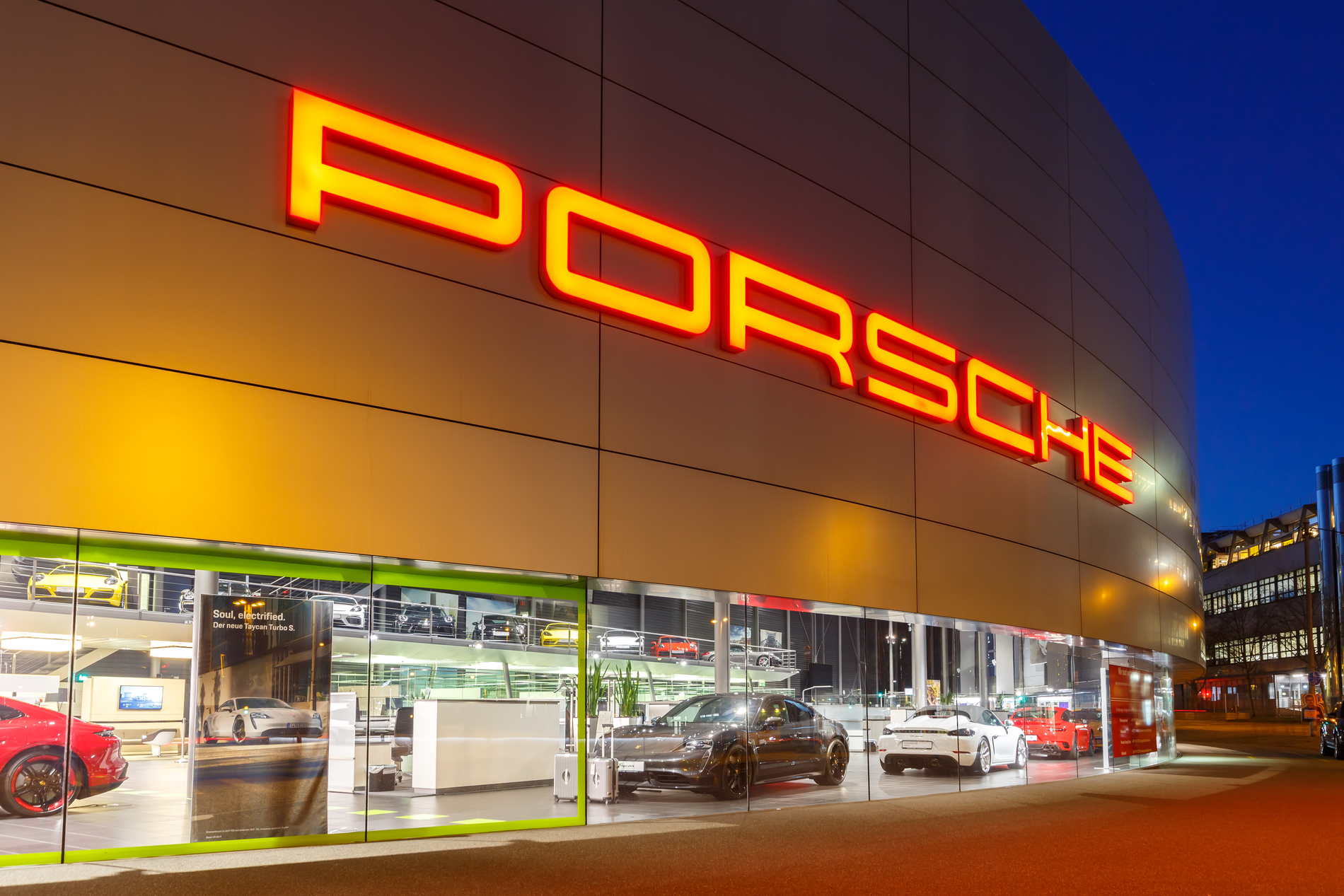
Porsche wants fewer, more expensive cars to restore the profitability that once made it the GOAT.
Porsche has laid out a major product and business overhaul plan through 2035, including a possible new mid-engine flagship above the 911, more high-end models, a mix of combustion, hybrid, and electric powertrains, and a much stronger focus on exclusivity.
CEO Michael Leiters presented the new strategy, called Sportwagenschmiede ’35, at Porsche’s Capital Markets Day on October 7. Porsche does not want to depend on selling more cars. It wants to earn more from each car it sells.
View this post on Instagram
Porsche is preparing something above the 911
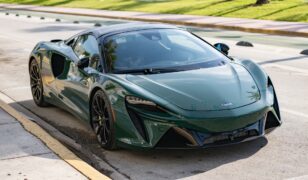
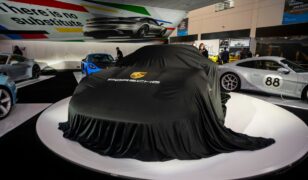
For supercar buyers, the biggest announcement is Porsche’s development of a new mid-engine super sports car architecture.
Porsche says the platform could support a model line positioned above the 911, potentially giving the company a true flagship supercar for the first time since the 918 Spyder.
A preview of the potential platform is scheduled for October 15. Porsche has already referred to the project through its Mission S material.
View this post on Instagram
The company also plans to expand the 911 range with additional high-end derivatives. CEO Michael Leiters separately confirmed that Porsche does not intend to turn the 911 into an electric car.
Combustion engines are firmly back in Porsche’s long-term plans
Porsche is no longer planning its future around an EV lineup. Instead, the company says it will continue investing in three powertrain types:
- Combustion engines
- Plug-in hybrids
- Electric vehicles
It will also increase cooperation with Audi through shared PPE and PPC vehicle architectures to reduce development costs.
One of the best examples is a new compact SUV with combustion and plug-in hybrid powertrains, which Porsche plans to present in 2028. It will be sold alongside the all-electric Macan and is expected to contribute meaningfully to Porsche’s sales and profits from 2029.
Several reports have described this vehicle as the return of an ICE Macan. Porsche itself has been more careful with the terminology. Its official announcement calls it a new B-segment SUV rather than confirming that it will use the Macan name.
Porsche is also exploring another, larger SUV positioned above the Cayenne. This project is still under review and isn’t yet a confirmed production model.
Electric sports cars are not disappearing either. Porsche says the upcoming electric 718 Boxster and Cayman will support sales during their first full year of production in 2028.
Fewer versions, but more expensive and exclusive cars
A major part of the Sportwagenschmiede ’35 strategy is what Porsche calls “Value over Volume.”
The company plans to decrease the number of model variants by about 20%, while increasing sales per remaining variant by roughly 30% over the medium term.
At the same time, Porsche wants to shift more of its lineup into larger, more profitable vehicle segments and increase the average selling price of its top models by about 20%.
Customization will also become a much bigger business. Porsche wants to expand programs such as Sonderwunsch and Exclusive Manufaktur and aims to increase revenue from its highly individualized vehicle business sixfold.
Porsche is also raising its stake in performance specialist Manthey Racing from 51% to 67%, supporting a larger business around performance kits, track experiences and highly exclusive vehicles.
Why Porsche is making such a major change
The strategy comes after a difficult financial period.
Porsche delivered 279,449 vehicles in 2025, which is 10.1% lower than in 2024. Deliveries in China fell 26% to 41,938 vehicles as the luxury market weakened and competition from Chinese manufacturers intensified.
More significantly, Porsche’s operating return on sales fell from 14.1% in 2024 to just 1.1% in 2025. Revenue declined from €40.08 billion to €36.27 billion. Porsche said extraordinary costs linked to its product realignment, battery operations, and US tariffs were major factors.
Profitability improved during the first half of 2026, when Porsche reported a 7.8% operating return on sales, although deliveries were still down 16.5% year over year.
The new plan centers on a smaller, more profitable Porsche. The company wants to reduce its break-even point to fewer than 200,000 vehicles a year, compared with the nearly 280,000 cars it delivered in 2025.
Its medium-term target is an operating return on sales of 10% to 15%, while its long-term target is 15%. Porsche also wants medium-term annual revenue of €41 billion to €45 billion.
Cost reductions will be substantial. Porsche is targeting development-cost reductions of up to 20%, production personnel-cost reductions of up to 30%, sales and distribution savings of 20%, and roughly 10% lower material costs for new vehicle projects. The company has also agreed to reduce around 9,000 jobs as part of its wider restructuring.
For enthusiasts, however, the most important part of Porsche’s plan is the product direction. The company is returning its attention to high-margin sports cars, special models and combustion-powered performance vehicles while continuing to develop EVs where it believes they make sense.
If Porsche follows through, its future lineup could become less complex but broader at the top, with more special 911s, an entirely new supercar above them, and a much stronger focus on the exclusivity that has traditionally supported Porsche’s pricing power.