JAS Tensei vs. First-Generation Honda NSX
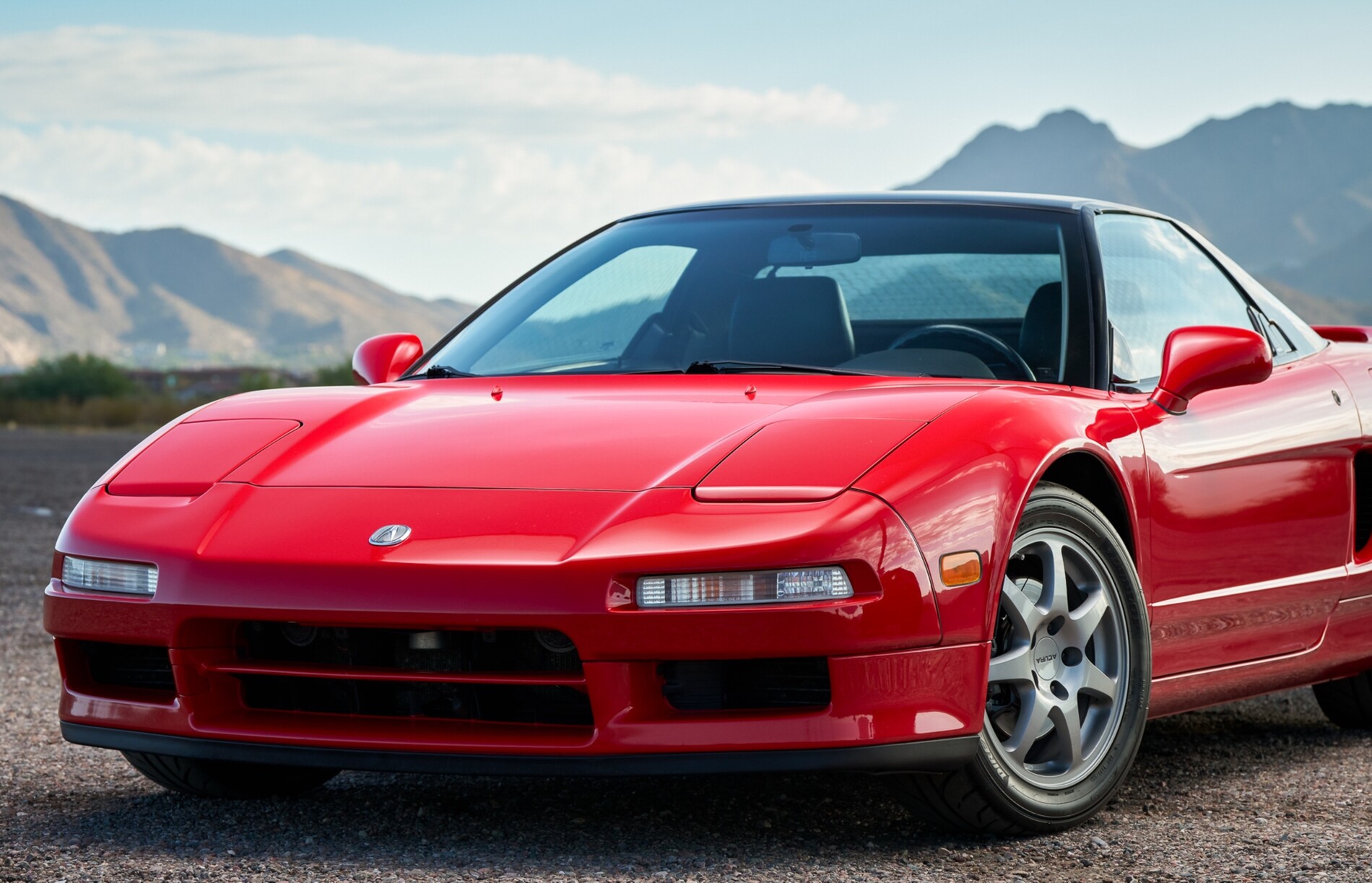
The JAS Tensei looks almost identical to the first-gen Honda NSX, but some differences do exist.
JAS Motorsport and Pininfarina revealed the Tensei on October 8, 2026. It is a rebuilt first-generation Honda NSX with a new carbon-fiber body, a larger V6, and a six-speed manual gearbox. JAS plans to build only 35 cars, and the expected price is around €880,000 ($985,000), excluding the donor NSX.
The Tensei is not a Honda product. JAS has supported Honda racing programs for nearly 30 years, but the car is a JAS project built on donor NSX cars, with design by Pininfarina and an engine by Judd Power.
Let’s compare both cars and see what has improved. But before we dive into the comparison, have a look at what original Honda NSX owners have to say about this legendary car.
The Honda NSX Was the Star of the Show
The original Honda NSX earned a reputation as a remarkably easy-to-drive, comfortable supercar. Owners praise its cushioned seats, excellent visibility, roomy cabin, and well-designed ergonomics. However, many recommend keeping a second car because of its low seating position, limited ground clearance, and tight headroom for taller drivers.
Maintenance is another important consideration. The biggest recurring expense is the timing belt service. One NSX Prime owner even reported spending $8,800 on a combined repair that included the clutch and axle. Parts availability can also be frustrating, as some components may take weeks to arrive. Age-related issues are worth watching, too, particularly cracked coolant reservoirs, brittle hoses, failing climate control units, and faulty stereos.
Interestingly, engine durability and performance were never issues. With regular servicing, the original NSX engine is dependable and can exceed 200,000 miles. Power is also adequate.
So, with a clearer picture of what owners love and what they would change, let’s see how well JAS Tensei preserves the original’s strengths and addresses its shortcomings.
What JAS and Pininfarina Changed
The Tensei keeps the original NSX design language, with a mid-mounted, naturally aspirated V6 driving the rear wheels. Almost everything else is new or reworked. Each car starts as a donor 1990s NSX, and JAS reinforces the chassis with carbon-Kevlar sections around the pillars and center tunnel.
| Original NSX (NA1) | JAS Tensei | |
| Engine | 3.0-liter V6 with VTEC, 8,000 rpm redline | About 3.5-liter Judd-built V6, 8,500 rpm redline |
| Power | 280 PS in Japan, 270 hp in the US (manual) | About 420 PS (414 hp) |
| Weight | About 1,350 kg (curb) | About 1,250 kg (JAS, dry) |
| Body | Aluminum | Carbon fiber on the reinforced original chassis |
| Gearbox | 5-speed manual or 4-speed automatic | 6-speed manual only |
| Stance | Original track and wheelbase | Track wider by about 170 mm front and 190 mm rear, wheelbase about 53 mm longer. |
| Suspension | Double wishbones | Fully adjustable, with four-way KW dampers and a front-axle lift |
| Production | 1990 to 2005 | 35 cars |
The Tensei is also 50% more powerful than the original NSX, with its redline increased by 500 rpm. However, Honda’s signature VTEC system has been dropped. Instead, the engine has received upgrades, including forged pistons and connecting rods, a billet crankshaft, individual throttle bodies, and an improved cooling system, to boost performance figures.
Pininfarina kept the original outline but softened its sharp edges. The pop-up headlights remain, now using LEDs on a titanium mechanism. The cabin gets exposed carbon, leather, Alcantara, new seats, and a simplified steering wheel, plus a digital gauge cluster built into the original architecture.
Is JAS Tensei Better Than Honda NSX
JAS hasn’t explicitly presented the Tensei as a solution to the original NSX’s owner complaints, but surely it addresses some of them.
The front-axle lift system, for example, reduces the risk of scraping its nose on steep driveways and ramps, a weakness of the original NSX. The Tensei also features a redesigned cabin with new seats and materials, while enhanced engine cooling may help modernize the car’s usability.
However, there’s no confirmed information on whether the climate control, air conditioning, or wiring have been upgraded, so it’s too early to say whether the NSX’s age-related electrical and interior issues have been fully addressed.
Parts availability and long-term servicing support remain open questions, too.
Honda began offering Heritage Parts for the first-generation NSX in April 2026, although availability varies by component. JAS, which operates independently of Honda, has listed contacts in Asia, the United States, Canada, and Europe, but the available sources don’t yet explain how it will handle long-term parts supply.
As for performance, the Tensei’s roughly 50% power increase is less a solution to an original NSX weakness than a shift in character. The NSX has always been about character and balance as much as outright power.
Verdict
The Tensei keeps the original NSX’s blueprint and recognizable shape, along with a naturally aspirated V6 and a manual gearbox. It changes nearly everything else, including the body, engine size, power, stance, and cabin. Whether those changes improve the car cannot be known until independent testers drive it.
The comparison comes down to two different kinds of ownership. The original NSX is the proven, much cheaper car with known upkeep costs and a long record of owner feedback. The Tensei is an expensive, limited reinterpretation that fixes some of the original’s practical weak points, like ground clearance, but it has no owner feedback yet.