How to Understand Dashboard Warning Lights

Learn the language of your car so you can talk to it.
Every time you start your car, the dashboard runs a quick self-test and all the lights flash briefly. That is normal. The problem is when one of them stays on after the test. If it happens, most drivers either panic or ignore it completely. Both are wrong moves.
This guide teaches you what those lights and symbols mean so that you can make the right call every single time.
Learn the Color System First
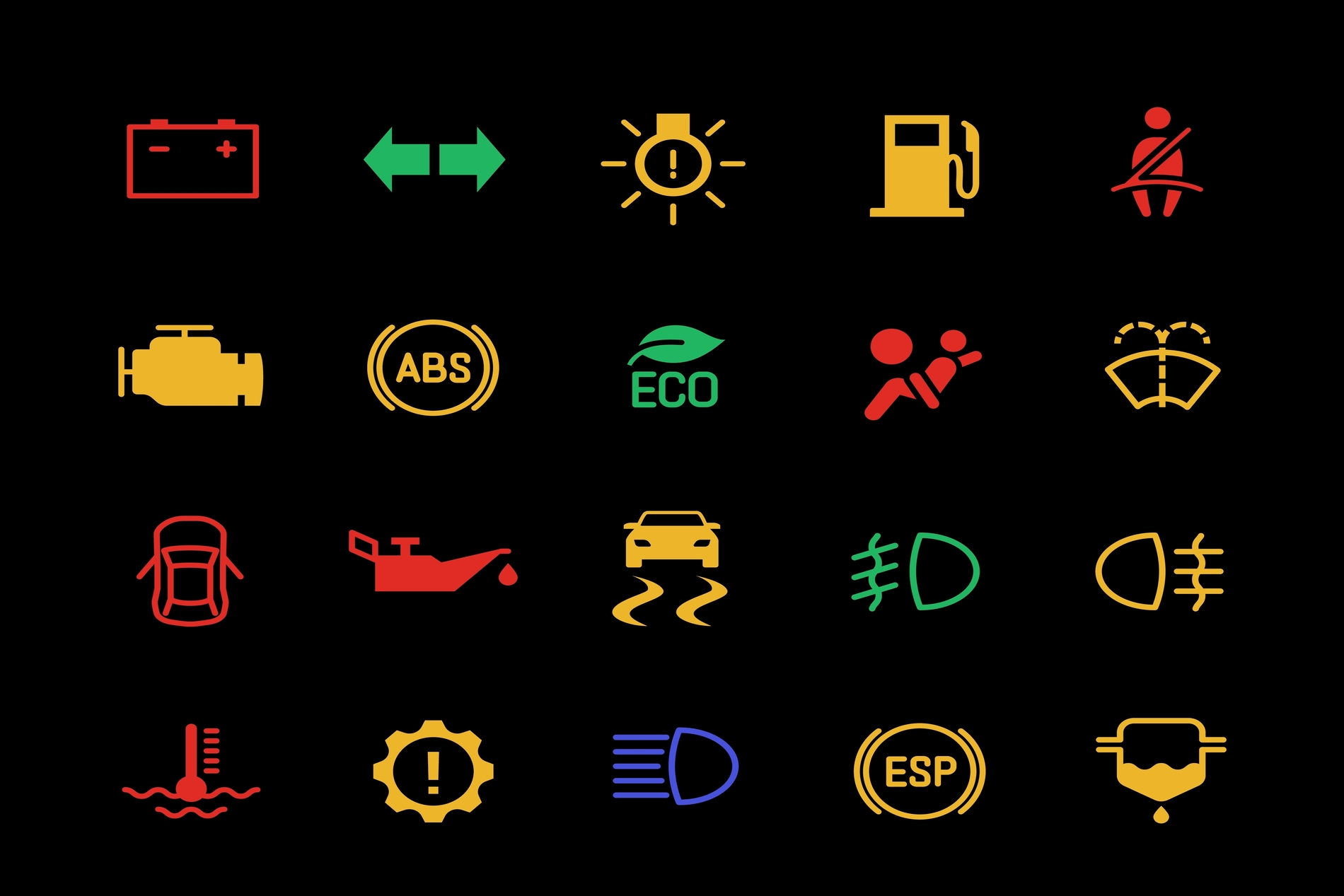
- Red means stop and take action now. Something is seriously wrong, or you are in danger of damaging your engine, brakes, or another critical system.
- Yellow / Amber / Orange means pay attention and get it checked soon. Not an emergency, but do not keep ignoring it.
- Green / Blue means a system is active and working. Nothing is wrong.
If you remember nothing else from this guide, remember: red is urgent, yellow is a warning, green and blue are fine.
The 4 Red Lights
These are not “check it when you get home” lights. They demand to pull over safely and turn off the engine. Here are 4 most common red dashboard lights:
1. Oil Pressure Warning Light

Looks like: A small red glowing oil can (like an old-fashioned lamp) with a drop coming from the spout.
What it means: Your engine has lost oil pressure. This is NOT the same as a low oil level. Oil pressure means the oil is not circulating through the engine properly. Without it, metal parts grind against each other with no lubrication. In a matter of minutes, you can seize the engine.
What to do: Pull over safely and shut the engine off immediately. Check your oil level with the dipstick. If the oil level is fine but the light is still on, do not drive it. Call for a tow. If the oil level is too low, you can add some and see if the light goes off, but have a mechanic check it regardless.
2. Engine Temperature Warning Light

Looks like: A thermometer sitting in liquid (usually coolant fluid waves). Sometimes red, sometimes it shows the word TEMP.
What it means: Your engine is overheating, maybe due to a low coolant level, a broken water pump, a stuck thermostat, or a blown head gasket. Overheating warps metal cylinder heads, which can crack the engine block.
What to do: Pull over safely and turn off the engine. Do NOT open the radiator cap when the engine is hot. Wait at least 30 minutes for things to cool down. Check coolant levels once cool. If it is low, top it up with the correct coolant type. If the level is fine, you need a mechanic.
3. Battery/Charging System Warning Light

Looks like: A rectangular battery symbol with a plus (+) on one side and a minus (-) on the other.
What it means: Your car’s charging system is failing. The alternator is not recharging the battery while you drive. Once the battery dies, your car will stall. Power steering, brakes, and everything else go with it.
What to do: Turn off anything drawing power that you do not need: AC, radio, heated seats, rear defroster. Drive directly to a mechanic or auto parts store. Do not turn the car off because it may not restart.
4. Brake Warning Light

Looks like: A circle with an exclamation mark inside, sometimes with the letter P, or the word BRAKE.
What it means: Two possible things. If your parking brake or handbrake is on, please release it. But if the parking brake is fully released and this light is still on, it means the brake fluid level is dangerously low, or there is hydraulic pressure loss in the brake system. That second scenario means your brakes may fail.
What to do: First, confirm your parking brake is fully released. If the light stays on, pull over carefully, do not brake hard, and call for help. Do not drive it.
The 6 Yellow Lights
Yellow means “this is not an emergency, but do not ignore it.” Here are the 6 most common yellow dashboard lights:
1. Check Engine Light (CEL)
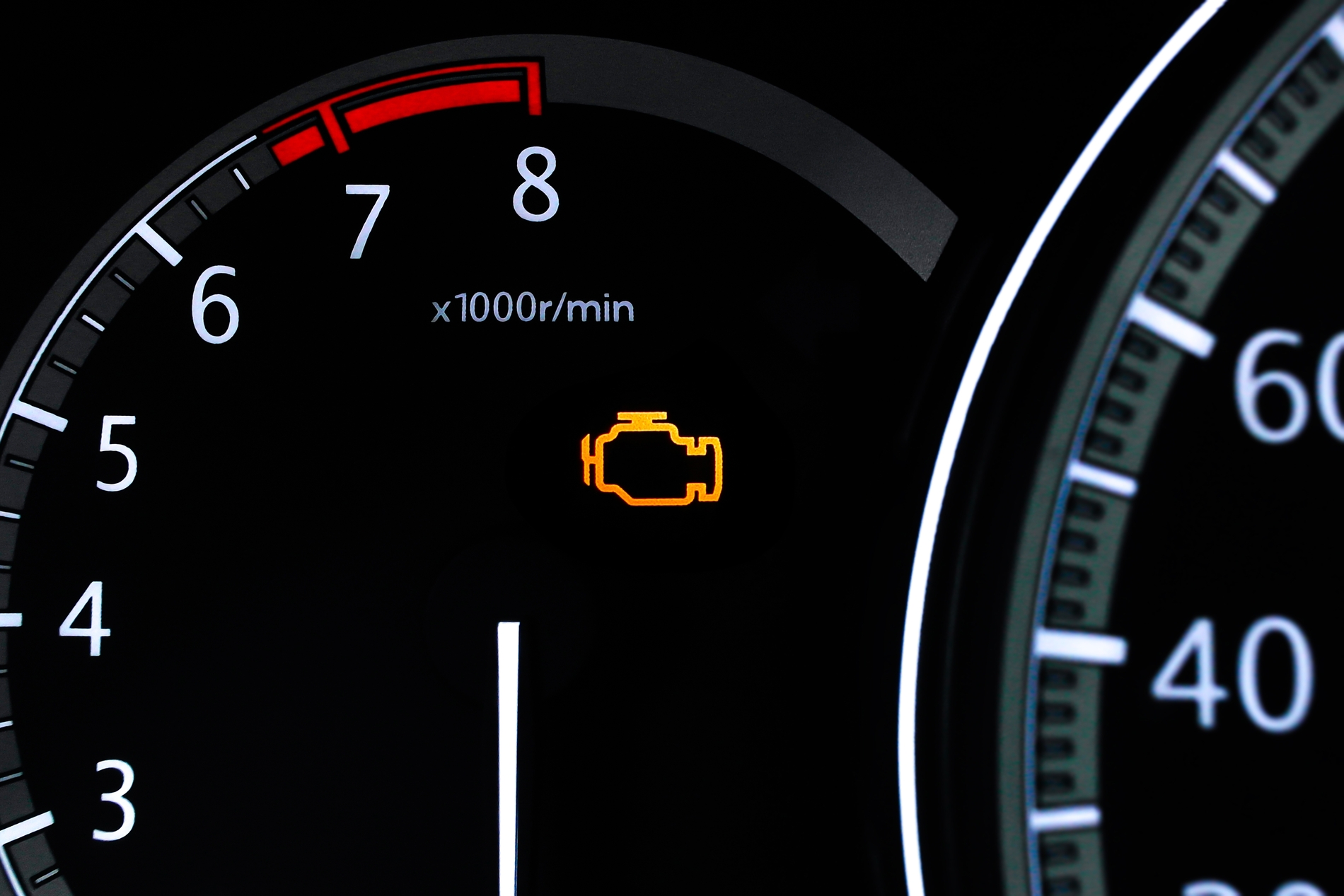
Looks like: An outline of an engine, usually yellow or amber. Sometimes reads “CHECK ENGINE” in text.
Solid yellow check engine light: Your car’s computer detected a fault and stored a diagnostic trouble code. It could be anything from a loose gas cap to a failing oxygen sensor. It does not mean your engine is about to explode. You can drive short distances to a mechanic if the car feels normal, but do not ignore it for weeks.
Flashing check engine light: A flashing CEL means the engine is actively misfiring right now. Unburned fuel is being dumped straight into the exhaust, and this destroys your catalytic converter. Pull over as soon as it is safe. Do not keep driving. If the flashing stops and the engine smooths out after restarting, you can cautiously drive a very short distance to a mechanic.
2. Tire Pressure Warning Light (TPMS)

Looks like: An exclamation mark inside a horseshoe shape (a cross-section of a tire) in yellow or amber glow.
What it means: One or more of your tires is under-inflated or over-inflated. By law in the US, all cars made after September 1, 2007, have this system.
What to do: Check all four tires with a pressure gauge and set it to the recommended PSI for your car. If the light stays on after correcting the pressure, the TPMS sensor itself may be faulty, or you have a slow leak.
Note: Cold weather naturally drops tire pressure. For every 10°F temperature drop, you lose about 1 PSI per tire. So in winter, your TPMS light coming on is very common.
3. ABS Warning Light

Looks like: The letters “ABS” inside a circle or just the text glowing yellow.
What it means: There is a fault in your Anti-lock Braking System. With this yellow light on, your brakes work in normal conditions, but you lose the anti-lock feature.
What to do: Drive carefully and get it checked at a mechanic soon. Avoid hard, panic-stop braking until fixed.
4. Traction Control / Stability Control Warning Light

Looks like: A car with squiggly lines underneath it (representing a skidding car), sometimes with the letters TC or ESP.
What it means when it flashes: The system is actively working to keep you from skidding. This is normal on slippery roads.
What it means when it stays on: Traction control has been either manually turned off or there is a fault in the system.
What to do: If you did not turn it off manually, have a mechanic scan it. Do not drive aggressively with this light on since you have reduced stability protection.
5. Airbag / SRS Warning Light

Looks like: A person in a seat with a circle in front of them (the inflated airbag). Usually yellow, but can be orange.
What it means: There is a fault somewhere in the Supplemental Restraint System (airbags and seatbelt pretensioners). Your airbags may not deploy in a crash, or they could deploy unexpectedly.
What to do: Get this checked promptly. Do not sit in a car indefinitely with a faulty airbag system.
6. Power Steering Warning Light

Looks like: A steering wheel with an exclamation mark, sometimes with the letters EPS or PS.
What it means: There is an issue with your power steering system. You can still steer the car, but it will feel extremely heavy and difficult, especially at low speeds or when parking.
What to do: Get it inspected. If the steering feels normal, it may be a sensor issue. If it already feels stiff, be very careful driving and go straight to a mechanic.
Green and Blue Lights Are Just Information

Green and blue lights are not warnings. They are simply telling you a feature is currently on or active.
Common ones you will see:
- Blue headlight symbol: Your high-beam headlights are on.
- Green headlight symbol: Your low-beam headlights are on.
- Green arrow (left or right): Turn signal is active.
- Green cruise control symbol: Cruise control is set and active.
- Green eco symbol: Eco mode is active.
- Blue/green temperature gauge: Engine is still warming up (mostly diesel or older cars).
Bonus: EV-Specific Warning Lights (For Electric Vehicle Owners)
If you drive an EV or a plug-in hybrid, there are a few additional lights worth knowing.
- Battery with a lightning bolt symbol: Your EV’s charge level is critically low. Find a charger.
- Battery with a thermometer: The battery pack is overheating. Pull over and park outside. Do not park in a garage with this light on, as an overheating EV battery is a serious fire risk. Call your manufacturer’s roadside line.
- Car with an exclamation point: A general fault in the electrical drivetrain system. Get it serviced immediately.
- “Ready” or “Power” indicator not appearing: In some EVs, if the car fails to enter ready-to-drive mode, this indicates a system fault preventing drive.
Quick Reference: Priority Order for Warning Lights
| Priority | Color | Action |
| 1 – Stop Now | Red (Oil, Temp, Brakes) | Pull over safely, turn off the engine |
| 2 – Pull Over | Flashing Yellow (Check Engine) | Pull over, tow if needed |
| 3 – Drive to the mechanic | Steady Yellow (CEL, ABS, Airbag) | Don’t ignore, get checked soon |
| 4 – Monitor | Steady Yellow (TPMS, TC) | Check and correct, and go to a mechanic if it persists |
| 5 – No Action | Green / Blue | Informational only, feature is active |
The Bottom Line
Your dashboard is not trying to scare you. It is giving you information. The color tells you how urgent it is. The symbol tells you what system is affected.
Learn the colors. Know the five most dangerous red lights. Do not ignore yellow lights for weeks. And always check the obvious stuff first (parking brake, gas cap, coolant level) before assuming the worst.
Your car talks. Now you know how to listen.